Industrial Machinery Company

Top 10 Waste Crusher Manufacturers for Global Buyers

Global waste volumes are rising, and buyers need more than a low purchase price. UNEP’s Global Waste Management Outlook 2024 estimates that municipal solid waste reached 2.1 billion tonnes in 2023. Without stronger prevention and management, that figure could reach 3.8 billion tonnes by 2050. The World Bank’s What a Waste 2.0 report also projected a substantial increase, from 2.01 billion tonnes in 2016 to 3.40 billion tonnes by 2050. These figures explain why reliable size reduction matters. A well-matched Waste Crusher can help prepare bulky waste for sorting, transport, or further processing. But the machine is only one part of the system.

Waste expert and environmental advocate Annie Leonard has put the broader challenge plainly: “There is no such thing as ‘away.’ When we throw anything away it must go somewhere.” Her point is relevant to crusher selection. Buyers should examine feed materials, throughput, output size, wear-part life, energy demand, maintenance access, and after-sales support. Ask for test results using material similar to your own. A glossy capacity figure is not enough. Real feed is inconsistent.

This guide compares ten manufacturers for global buyers, focusing on product fit, application experience, service capability, and documented performance. It is not a substitute for site trials or technical due diligence. Some specifications look comparable on paper, yet operating conditions can change the result. That deserves a second look. A careful shortlist can help buyers choose equipment that fits their waste stream, rather than forcing the waste stream to fit the machine.
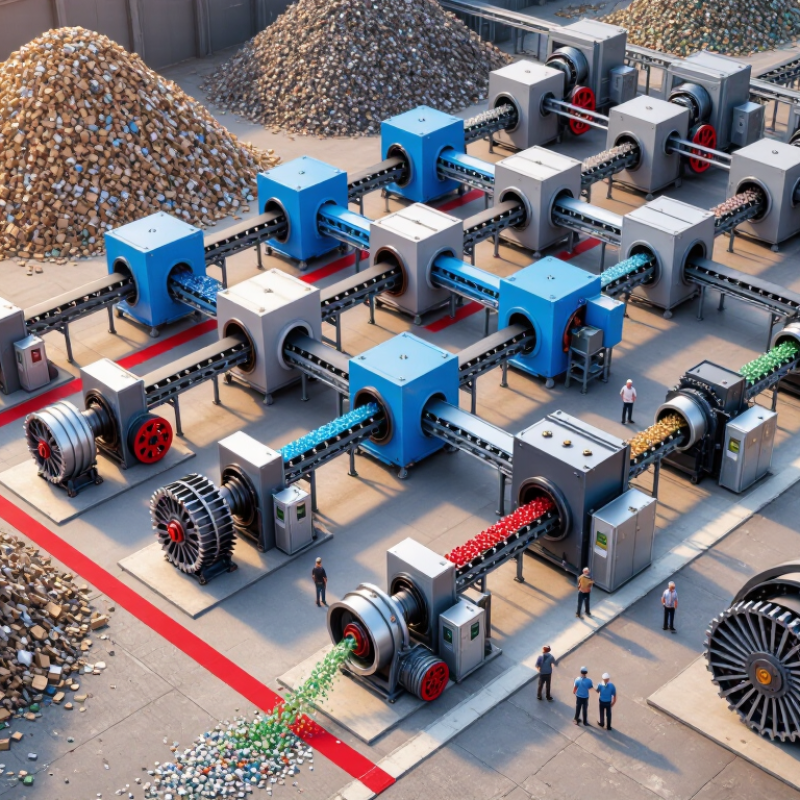
Top 10 Waste Crusher Manufacturers for Global Buyers

What Waste Crushers Are and How They Process Materials

Waste crushers are industrial machines that reduce bulky discarded materials into smaller, more manageable pieces. Depending on the feedstock, they use rotating shafts, teeth, hammers, or blades to break material through cutting, shearing, or impact. A wet, stringy load behaves differently from dry concrete. Crusher design therefore matters: a machine suited to wood may struggle with rigid, abrasive material.

Processing usually begins with checking and sorting the incoming load. Workers or automated systems may remove items that could damage equipment, while conveyors carry suitable material into the crushing chamber. The reduced material can pass through a screen that helps control particle size; oversized pieces may return for another pass. Magnets or other separation equipment can remove certain contaminants downstream. The output is not automatically recyclable.

In practice, the neat process diagram can be misleading: loads change by the hour. Moisture, feed size, hardness, and contamination all affect throughput and wear. Operators monitor factors such as motor load, vibration, and unusual noise, then adjust feeding or settings when needed. A clear target size helps, but real waste rarely arrives in a perfectly consistent mix.

Main Types of Waste Crushers and Their Industrial Uses

Waste crushers are designed around how material breaks, not just how much enters the machine. Single-shaft shredders use rotating cutters and a screen to produce a more controlled particle size. They commonly process plastic packaging, wood offcuts, and mixed commercial waste. Twin-shaft models use interlocking cutters to tear bulky items at lower speeds. They suit uneven feed, such as pallets, drums, and large pieces of scrap.

Hammer mills strike material with rapidly moving hammers. They are useful for brittle items, including glass, some electronic scrap, and dry organic waste, when a smaller output is needed. Jaw crushers compress hard, bulky material between fixed and moving plates. Recycling facilities may use them for concrete rubble and masonry before further separation. Shear shredders cut tough, flexible feed, but stringy materials can wrap around shafts. That detail is easy to underestimate.

Match the machine to the actual waste stream. Check its moisture, abrasiveness, dimensions, and likely contaminants before comparing throughput figures. A wet load may clog screens; grit can accelerate wear on cutting parts. It matters. Ask for a test using representative feed, not a clean sample prepared for a demonstration. Even then, real waste changes from one shift to the next, so access for cleaning and routine blade inspection deserves careful attention.

Top 10 Waste Crusher Manufacturers for Global Buyers - Main Types of Waste Crushers and Their Industrial Uses

Equipment guide: This table compares common waste-crushing and shredding machine types, not individual manufacturers or brands. Suitability depends on material composition, contamination, required output size, and plant configuration.

No. Machine Type Typical Working Principle Common Feed Materials Typical Industrial Uses Key Selection Consideration
1 Single-Shaft Shredder A rotating rotor works against a screen and hydraulic pusher to reduce material to a controlled size. Plastic lumps, film, wood, packaging waste, and production scrap. Plastic recycling, wood-waste processing, and preparation of materials for further sorting or granulation. Screen openings influence output size; inspect material thickness, toughness, and the need for a consistent product.
2 Dual-Shaft Shredder Two counter-rotating shafts use intermeshing cutters to tear and shear bulky material. Mixed municipal solid waste, bulky waste, tires, drums, and selected industrial scrap. Waste volume reduction, pre-shredding, and preparation of mixed or bulky feed for downstream processing. Usually produces a coarse, less uniform output; confirm feed restrictions and the required downstream size.
3 Four-Shaft Shredder Multiple cutter shafts shear material, with sizing screens used in some designs to control discharge size. Plastics, electronic scrap, light metal scrap, and mixed industrial waste. Recycling lines that need staged cutting and a more controlled output than coarse pre-shredding. Screen and cutter configuration should match the target particle size and the material’s metal content.
4 Hammer Mill High-speed hammers impact and break material; screens help determine the discharged particle size. Wood waste, selected biomass, brittle plastics, and other materials suited to impact reduction. Biomass preparation, wood-waste processing, and size reduction of suitable brittle feedstocks. Check moisture, abrasiveness, and the risk of sparks or dust; unsuitable feed can increase wear and operating risks.
5 Jaw Crusher Material is compressed between a fixed jaw and a moving jaw. Concrete, masonry, bricks, and other hard, brittle construction and demolition debris. Construction and demolition recycling, where large rubble is reduced before screening or secondary crushing. Best suited to hard, brittle feed; remove reinforcing steel and other uncrushable items as required by the system.
6 Impact Crusher Rotors or impact elements accelerate material against impact surfaces to break it by impact. Concrete, asphalt, masonry, and other mineral construction waste. Secondary reduction and aggregate production in construction and demolition recycling operations. Feed hardness, abrasiveness, and metal contamination affect wear; a suitable separation process may be needed.
7 Roll Crusher One or more rotating rolls compress or shear material through a controlled gap. Relatively brittle materials, selected mineral waste, and some dry process residues. Controlled size reduction where a comparatively uniform product and limited fines are important. Confirm that the material is suitable for compression or shear and that the roll gap meets the output requirement.
8 Plastic Granulator Rotating knives cut plastic against stationary knives; a screen controls the granule size. Plastic sprues, runners, rejected molded parts, and pre-shredded plastic. In-house plastics recycling and preparation of plastic regrind for subsequent processing. Match rotor and screen configuration to polymer type, part thickness, and the desired regrind size.
9 Tire Shredder Heavy-duty cutters shear whole or sectioned tires into smaller pieces, often in multiple processing stages. End-of-life tires, subject to the machine’s accepted tire sizes and feed requirements. Tire recycling and preparation of tire-derived material for further separation or processing. Steel reinforcement and tire construction create substantial wear; downstream wire and fiber separation may be required.
10 Mobile Crusher A crusher mounted on a mobile chassis processes feed on-site; the crushing mechanism may be jaw, impact, or another type. Concrete, asphalt, masonry, and other suitable construction and demolition materials. On-site recycling at demolition projects, quarries, and temporary material-processing locations. Choose the crushing mechanism for the feed and review site access, mobility, dust control, and material-separation needs.

How to Evaluate Waste Crusher Manufacturers for Global Purchasing

A waste crusher should be judged against the material it will actually process, not a headline capacity figure. Ask manufacturers for test data using similar feedstock, including moisture, bulk density, and particle size. A machine rated for 20 tonnes per hour may perform differently on wet, tangled material.

Request details on rotor speed, screen openings, motor power, and expected wear-part life. Specific answers matter. A clean brochure is not evidence.

Check how the supplier supports installation, operator training, and routine maintenance across your location. Ask which spare parts are stocked, how quickly they can be dispatched, and whether remote troubleshooting is available.

Paperwork matters. Review inspection records, warranty terms, technical drawings, and electrical requirements before comparing landed costs. If possible, arrange a witnessed test or speak with customers handling comparable waste streams. Do not rely on a single reference.

Some details may remain uncertain until commissioning, so record assumptions about throughput, feed consistency, and downtime in the purchase agreement. That extra caution can feel tedious, but replacing a rotor or waiting weeks for a critical bearing is worse.

Profiles of 10 Waste Crusher Manufacturers Serving Global Buyers

These ten manufacturer profiles represent different strengths, not a ranked list of named companies. A mobile crusher maker suits sites where equipment must move between sorting areas. A twin-shaft specialist focuses on slow-speed cutting for bulky, mixed loads. A single-shaft producer typically offers adjustable screens for more consistent output. A compact-machine builder serves transfer stations with limited floor space. Small footprints matter.

For metal-rich waste, one manufacturer profile centers on wear-resistant cutters and accessible maintenance points. A wood-waste supplier may design machines around bark, pallets, and variable moisture. Municipal waste specialists often prioritize high throughput and jam-clearing access. Pre-shredding system makers prepare mixed material for later sorting or fuel processing. Their performance depends heavily on the incoming mix.

Other profiles include wet-waste equipment makers, whose designs must manage sticky material, and modular-system manufacturers, which combine conveyors, screens, and crushers. Buyers should compare rated capacity with real feed conditions, not just brochure figures. Ask about cutter replacement time, spare-parts lead times, and test results using similar material. These details are easy to overlook. Public specifications may also omit operating limits, so request written clarification before comparing suppliers.

Regional Waste Generation: Global Market Context for Waste Crusher Buyers

Estimated annual municipal solid waste generation by world region, in million tonnes (2016).

Higher waste volumes can point to greater waste-processing needs, but do not directly measure waste crusher sales. Source: World Bank, What a Waste 2.0 (2018); figures rounded.

Comparing Manufacturer Capabilities, Support, and Export Readiness

Comparing waste crusher manufacturers means looking beyond motor power and quoted throughput. UNEP and the International Solid Waste Association estimate that municipal solid waste reached 2.1 billion tonnes in 2023, with 3.8 billion tonnes projected by 2050, in the Global Waste Management Outlook 2024. That rising volume makes uptime, feed flexibility, and service access commercial issues, not brochure details. Ask how each machine handles wet organics, bulky packaging, and abrasive contaminants under real operating conditions.

Request tests using your own material. Test it. A clean sample can mislead.

Compare rotor design, screen options, overload protection, and safe access for clearing jams. Then examine support: spare-parts availability, response times, remote diagnostics, commissioning, and operator training. These details matter when a bearing fails far from a port.

Export readiness should include packing dimensions, electrical documents, installation drawings, and a realistic shipping schedule. Verify who handles export paperwork and provides local technical support; vague answers deserve follow-up. Ask for references from facilities processing similar waste, and check whether quoted throughput accounts for downtime and sorting losses. It often does not.

Even a site visit cannot prove long-term reliability, so treat polished demonstrations with some caution.

Article Source: