Industrial Machinery Company

Top Stadium LED Screen Options for Sports Venues

A stadium’s LED display does more than show the score. It shapes the live experience, from a close-up replay on the center-hung screen to a sponsor message moving along the perimeter ribbon. The right choice depends on venue size, viewing distance, sunlight, and the events a venue hosts. A bright outdoor board may suit an open football ground, while a finer pixel pitch can help indoor spectators read detailed graphics. There is no universal winner.

Technology leader Bill Gates wrote, “Content is king.” His remark was not about stadium displays, but it offers a useful reminder: even a powerful Stadium Led Screen needs clear, well-timed content. For venue teams, that means checking how score graphics, replays, and live information appear from the farthest seats—not only from the control room. Small details matter. Glare at 4 p.m. can flatten colors; a narrow viewing angle can make a replay harder to follow. Reliability matters, too. A screen that looks impressive on opening night but is difficult to service may become a costly compromise.

This guide compares common stadium LED screen options, including center-hung displays, end-zone boards, ribbon screens, and perimeter systems. It considers resolution, brightness, sightlines, control, and maintenance. Specs do not tell the whole story. Venue operators should test sample content at real viewing distances and ask how service access works during a busy season. A useful choice is not always the largest one. Sometimes, the best decision is the one a venue can operate consistently—and reassess when its needs change.
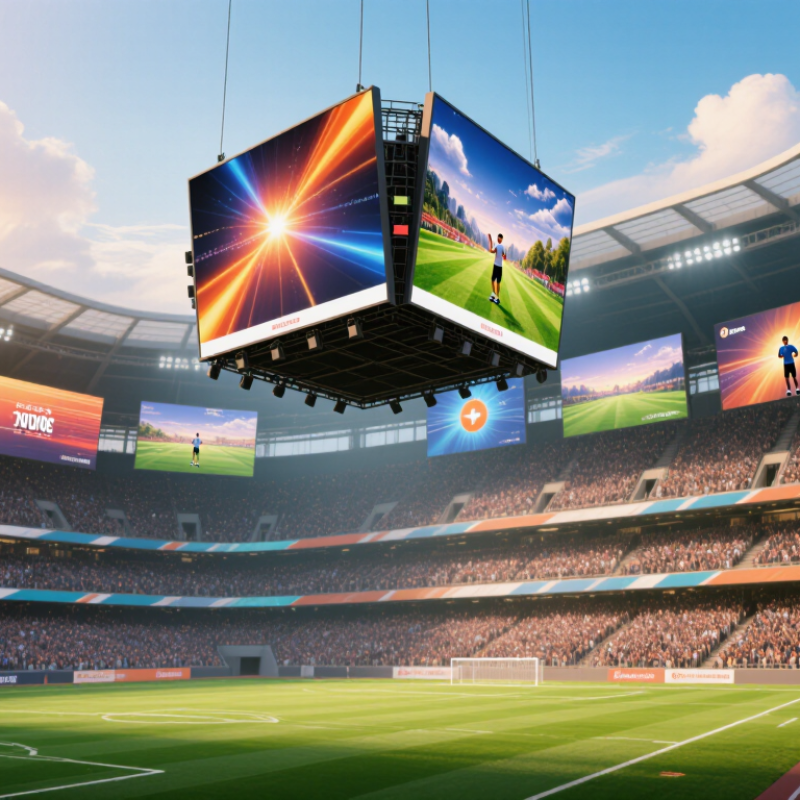
Top Stadium LED Screen Options for Sports Venues

Types of LED Screens Used in Sports Venues

Sports venues use several LED screen types, each serving a different viewing distance and purpose.

Main video boards sit above the field or court and show replays, scores, and live camera feeds. Their size and pixel pitch should suit the farthest seats, not just the premium sections.

Distance matters. A screen that looks sharp up close may appear less detailed from the upper deck.

Ribbon displays run along seating tiers or fascia, carrying scores, prompts, and sponsor messages without blocking the action.

Perimeter LED boards line the playing surface and are designed for clear visibility from the stands and broadcast cameras.

Concourses may use smaller information screens for directions, schedules, and queue updates. For temporary events, mobile LED panels offer flexibility, though their placement and support structures need careful planning.

Brightness, refresh rate, viewing angle, and access for maintenance all affect performance.

A common mistake is assuming bigger is always better; it is not. The best arrangement depends on venue layout, ambient light, and what spectators need to see.

These choices deserve a site review, since even a well-specified display can be poorly placed.

Key Features That Shape Stadium Screen Performance

A stadium LED screen must remain readable from the upper deck, the sidelines, and seats far from the centerline. Pixel pitch affects how clearly close viewers see fine details, while viewing distance helps determine an appropriate pitch. Brightness matters, but maximum output is not always the answer. In direct afternoon sun, strong brightness and contrast help preserve visibility; at night, excessive output can feel harsh.

Motion handling matters during fast play. A suitable refresh rate can reduce visible flicker and improve camera footage, though performance also depends on broadcast equipment and settings. Wide viewing angles help fans see consistent colors from different sections. Small details matter. Check the screen from real seating positions, not only from the control room.

Outdoor screens need enclosures suited to local rain, dust, temperature shifts, and wind exposure. Service access also deserves attention: technicians need practical ways to inspect modules, cables, and power connections. Energy use, spare-part availability, and the time required for repairs affect operating costs. Test it at night. A feature list can look convincing on paper, yet overlook glare, uneven color, or awkward maintenance access. A full-scale viewing test can reveal these issues before installation plans are fixed.

Top Stadium LED Screen Options for Sports Venues

How pixel pitch relates to a practical minimum viewing-distance planning guide

A common planning rule of thumb is that the minimum viewing distance in meters is roughly equal to pixel pitch in millimeters. The pitches shown are representative LED display options; actual viewing comfort depends on content, installation, and venue conditions.

How Stadium LED Screens Serve Fans and Event Operations

A stadium LED screen does more than enlarge the action; it gives fans across the venue a shared point of attention. A center-hung board, end-zone display, or ribbon screen serves a different viewing need. At a night match, clear score graphics and close-up replays help fans follow moments they may miss from their seats. Text size and contrast matter as much as resolution, especially when viewers glance up briefly. Viewing distance, sightlines, and daylight should guide screen size and pixel pitch. A bright display can still feel hard to read. Less clutter helps.

For operations teams, screens are flexible communication tools, not just entertainment surfaces. Operators can switch between live footage, schedules, sponsor placements, and venue updates from a control position. Reliable signal paths and rehearsed fallback procedures reduce confusion if a feed or player fails. Weather-rated equipment, accessible service points, and planned power capacity also matter on busy event days. Before opening, teams should test content legibility from several seating zones, not only the control room. That balance is easy to underestimate. A screen may look impressive in a demonstration yet compete with sunlight or surrounding signage at the venue. The best choice supports spectators and staff without demanding attention every second.

Factors for Choosing LED Screens for a Sports Venue

Choosing an LED screen starts with the people who need to see it. Measure viewing distances from the upper seats, corners, and standing areas, not just the center row. Pixel pitch should suit those distances; finer pitch can improve close-up detail, but it usually raises cost. Measure it in person. A sample image viewed under stadium lighting can reveal details that a specification sheet misses.

Outdoor venues need enough brightness for direct sunlight, with controls that keep the picture comfortable after dusk. Check weather protection, operating temperature, and how the structure handles wind and vibration. Rain changes everything. Ask how technicians will reach modules and power components without disrupting an event. Maintenance access is easy to overlook during planning. It can become a real problem later.

Match screen size and placement to sightlines, score information, and replay content. A larger display is not automatically clearer if supports or roof edges block the view. Confirm refresh performance with fast-moving footage, and test cameras in the actual venue when possible. Also consider power use, spare-module availability, and the time needed for repairs. Early plans are often too optimistic about both budget and installation time. Leave room for adjustments after a site survey; real venues rarely match the first drawing perfectly.

Top Stadium LED Screen Options for Sports Venues — Factors for Choosing LED Screens for a Sports Venue
Screen Option Typical Venue Placement Typical Pixel Pitch Typical Brightness Key Selection Factors Advantages Considerations
Main scoreboard or center-hung display Above the playing area or at the ends of the venue About 4–10 mm About 1,000–5,000 nits, depending on whether the venue is indoor or outdoor Viewing distance, screen dimensions, sightlines, content resolution, and structural load Supports live video, replays, scores, statistics, and sponsor content in one prominent display Requires suitable rigging or support structures, service access, and careful control of viewing angles
Perimeter LED boards Around the field, court, or rink About 6–10 mm About 5,000–8,000 nits for many outdoor installations Camera refresh performance, impact protection, viewing angle, and safe access for maintenance Provides continuous visibility to spectators and broadcast cameras while keeping messages close to the action Must be designed for ball or player impact risks; brightness and content should not distract athletes
Stadium ribbon display Along the upper seating fascia or around the interior bowl About 6–12 mm About 2,000–6,000 nits, depending on ambient light and exposure Viewing distance, curve or corner geometry, pixel pitch, and consistent brightness across the full run Offers long, uninterrupted areas for scores, alerts, animations, and advertising Long cable runs, structural mounting, and content readability at different seating levels need attention
Concourse and wayfinding displays Entrances, concourses, concessions, and circulation areas About 2.5–6 mm About 800–2,000 nits for typical indoor areas Close viewing distance, ambient lighting, viewing angle, and integration with venue information systems Useful for directions, schedules, safety messages, and live event updates Higher pixel density can increase cost; placement should avoid obstructing circulation or accessible routes
Exterior facade or entrance display Building facade, ticketing areas, and outdoor plazas About 8–20 mm About 5,000–10,000 nits for direct-sunlight conditions Weather resistance, sunlight readability, viewing distance, wind loading, and local planning requirements Creates a visible welcome point and can share event information with people outside the venue Needs suitable outdoor protection, drainage, ventilation, and a maintenance plan for exposed components
Training or press-room display Media rooms, interview areas, and team facilities About 1.5–4 mm About 600–1,500 nits for controlled indoor lighting Close-up image quality, camera use, color consistency, and room lighting Can present video, analysis, interview backdrops, and presentation material at close range Fine pixel pitch is usually most valuable when viewers or cameras are close to the screen
Planning note: Pixel-pitch and brightness figures are typical planning ranges, not fixed specifications. The right choice depends on viewing distance, indoor or outdoor conditions, direct sunlight, camera requirements, content, local regulations, structural capacity, and maintenance access. Confirm final specifications with a qualified venue display and structural professional.

Installation and Maintenance Considerations for Stadium LED Displays

Installing a Stadium Led Display starts with the structure, not the screen. Engineers should check wind loads, mounting points, vibration, and safe access before selecting cabinet sizes. Sightline tests from lower seats and upper rows reveal gaps that a drawing may miss. Keep power and data routes separate where practical, and leave room behind the display for technicians. Tight access can turn a small repair into a long stoppage.

Brightness should suit changing daylight and night events, without washing out nearby views. Pixel pitch depends on typical viewing distance; a close concourse screen needs finer detail than a distant end-zone board. Weather sealing, drainage, and airflow matter, too. Dust and heat build up quietly. During commissioning, test the full display, control system, emergency power behavior, and content playback under realistic conditions.

Maintenance planning should be part of the installation contract. Provide safe lifting points, clear service procedures, and compatible spare modules on site. Schedule inspections around the sports calendar, checking connectors, fans, seals, and brightness consistency. Record faults and repairs so recurring issues become visible. A checklist helps, but it cannot predict every failure. Even careful plans may overlook a cable route that becomes difficult to reach once the venue is busy.