What is an IQF Tunnel Freezer and How Does it Work?
In the realm of food processing, the IQF Tunnel Freezer stands out as a vital innovation. Noted expert Dr. Emily Harris states, "An IQF Tunnel Freezer revolutionizes how we preserve food quality." This technology offers rapid freezing, which helps maintain freshness and texture in products ranging from fruits to seafood.
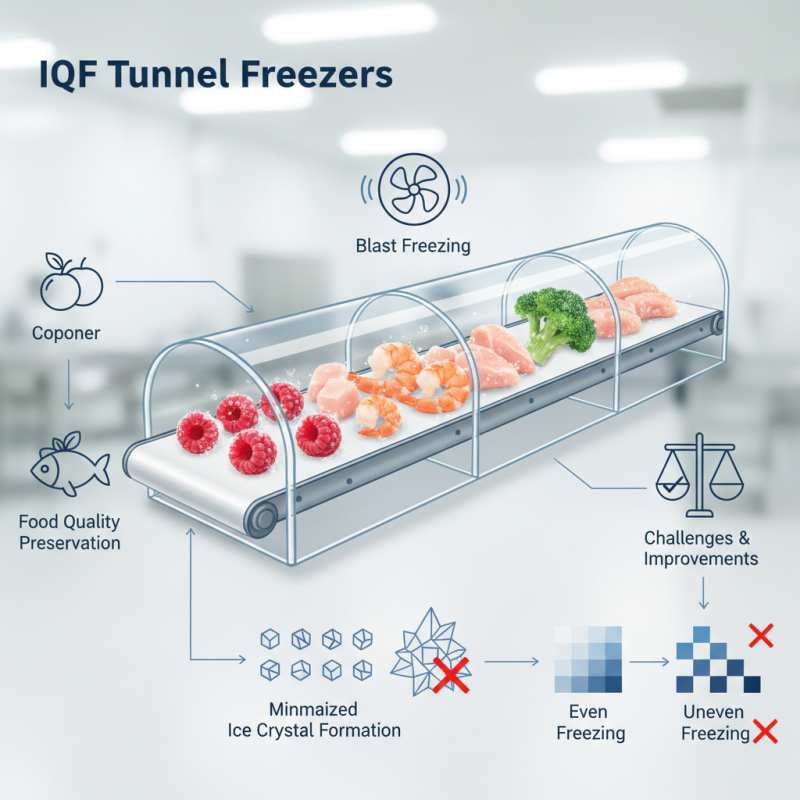
The mechanism behind an IQF Tunnel Freezer is fascinating. It employs a blast freezing method that minimizes ice crystal formation. This process ensures that foods retain their original characteristics. However, even with advanced technology, several challenges persist. For example, uneven freezing can lead to poor quality in certain batches.
Understanding the IQF Tunnel Freezer is essential for anyone in the industry. Its impact on food preservation is undeniable. Yet, it is crucial to be aware of its limitations. Continual improvement in freezing techniques is necessary for optimal results.
What is an IQF Tunnel Freezer?
An IQF tunnel freezer, or Individual Quick Freezer, is designed for rapid freezing of food products. This method prevents the formation of large ice crystals, which can damage the texture and quality of the product. Foods like vegetables, fruits, and meats maintain their original flavor and nutrients after freezing.
The operation begins with a conveyor belt that moves the food items through a tunnel. Cold air is circulated rapidly, ensuring uniform freezing. Temperatures can drop to as low as -40°F (-40°C) in a matter of minutes. This efficient freezing process helps in preserving quality while also extending shelf life.
While IQF technology offers many benefits, it's not without challenges. The initial cost of equipment can be significant, which may deter smaller businesses. Moreover, improper operation can lead to inconsistent freeze times, impacting the final product quality. Regular maintenance is crucial to ensure optimal performance. Balancing these factors requires careful consideration in the food processing industry.
IQF Tunnel Freezer Performance Metrics
Principle of Operation of IQF Tunnel Freezers
IQF (Individually Quick Frozen) tunnel freezers are essential in the food processing industry. Their primary job is to rapidly freeze small food items. This technique preserves quality, texture, and flavor.
The operation principle of IQF tunnel freezers is fascinating. Food items pass through a long, insulated tunnel. Here, they are exposed to a blast of freezing air. The air circulates rapidly, dropping temperatures quickly. This process prevents ice crystals from forming within the food. Ice crystals can damage cell structures, leading to soggy or unappealing outcomes when thawed.
Food handlers need to monitor the freezing process closely. Factors like airflow and temperature must be controlled. If not, the results can be inconsistent. Sometimes, some items may freeze unevenly. This can compromise the final product's quality. Despite the technology's effectiveness, ongoing assessments are necessary. Balancing speed and thoroughness in freezing is critical for achieving high standards.
Advantages of Using IQF Tunnel Freezers in Food Processing
IQF tunnel freezers, or Individual Quick Freezers, provide distinct advantages in food processing. They rapidly freeze individual food items, such as fruits, vegetables, and seafood. This method ensures that each piece retains its quality, texture, and nutrients. Traditional freezing can lead to ice crystal formation, which damages cells. In contrast, IQF systems minimize this risk by freezing items quickly and uniformly.
Using IQF tunnel freezers also enhances efficiency in the production line. Foods can be processed continuously without the need for extensive pre-freezing preparation. The design allows for large volumes of products to be handled quickly, making it an ideal solution for high-demand settings. There is also less waste; the ability to freeze items individually means that end-users can take what they need without compromising the rest of the batch.
While the benefits are clear, implementing an IQF system may involve challenges. Initial costs can be high, and maintenance requires expertise. Companies need to weigh these factors against the long-term gains. Additionally, monitoring temperature consistency is critical. Any fluctuations can affect the quality of the final product. Addressing these issues ensures the longevity and reliability of the freezing process.
Key Components of IQF Tunnel Freezers
IQF tunnel freezers are essential in the food processing industry. They allow for the rapid freezing of products, maintaining their quality and texture. The key components of these freezers significantly influence their efficiency and effectiveness.
One major component is the refrigeration system, which cools the tunnel environment. It usually comprises compressors, condensers, and evaporators working together to maintain low temperatures. This system must be reliable and efficient to ensure optimal performance.
Conveyor belts play a critical role, transporting the food items through the freezing chamber. Their speed and angle can be adjusted to control the freezing time.
Airflow design is crucial in an IQF tunnel freezer. It helps ensure the rapid and uniform freezing of products. Proper airflow minimizes the formation of ice crystals, which can damage the texture of the food.
Insulation also matters. Quality insulation prevents heat transfer, maintaining the energy efficiency of the freezer. These components must be regularly maintained to avoid breakdowns, which can lead to product loss. Addressing any inadequacies in these systems is vital for continuous operation.
Applications of IQF Tunnel Freezers in the Industry
IQF (Individually Quick Frozen) tunnel freezers have become essential in various industries, especially in food processing. They allow the rapid freezing of individual items, preventing the formation of large ice crystals. This process preserves the texture and integrity of food products, making them more appealing to consumers. According to a report by MarketsandMarkets, the global IQF market is expected to grow at a CAGR of 5.6% from 2021 to 2026. This surge is driven by rising demand for frozen fruits and vegetables.
In the seafood sector, IQF tunnel freezers enhance product quality. They prevent cell damage in fish and shrimp, ensuring freshness and taste retention during storage. The National Fisheries Institute reports that frozen seafood sales reached $5.5 billion in the U.S. during 2020, showcasing the significant role of freezing technology. Furthermore, the bakery industry is increasingly utilizing IQF methods for dough and pastries, allowing for better quality control during production. The flexibility of these freezers supports just-in-time inventory management, reducing waste.
Despite these advancements, challenges remain. Initial investment costs for IQF technology can be high, particularly for smaller businesses. Additionally, ensuring energy efficiency while maintaining optimal freezing conditions is vital. Continuous development in this technology is necessary to address these issues and enhance operational efficiency further.
What is an IQF Tunnel Freezer and How Does it Work? - Applications of IQF Tunnel Freezers in the Industry
| Application | Product Type | Process Duration (minutes) | Temperature Range (°C) | Production Capacity (kg/h) |
| Vegetable Freezing | Green Beans | 5 | -30 to -18 | 1000 |
| Fruit Freezing | Strawberries | 10 | -30 to -18 | 800 |
| Seafood Freezing | Shrimp | 3 | -35 to -20 | 600 |
| Meat Freezing | Chicken Breast | 15 | -30 to -18 | 1200 |
| Dairy Product Freezing | Cheese | 8 | -20 to -15 | 400 |