Industrial Machinery Company

How to Choose the Right Ozone Sensor for Your Needs?

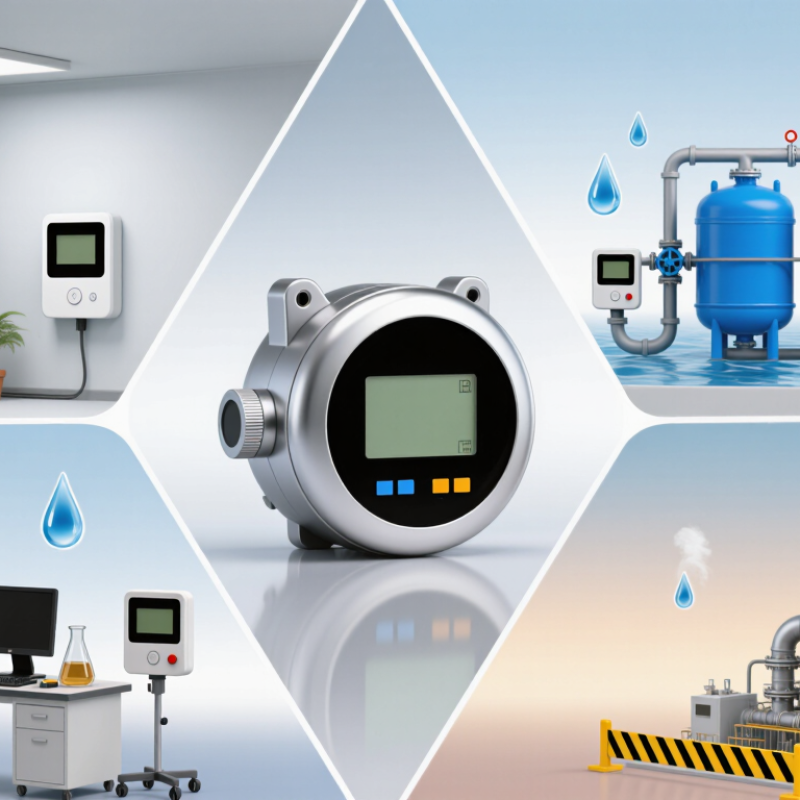
Choosing the right Ozone Sensor begins with understanding the environment, not browsing a product list. Indoor air systems, water treatment lines, laboratories, and industrial exhausts require different measurement methods. A sensor exposed to humidity, temperature swings, or chemical vapors may drift faster than expected. That small error can affect alarms, maintenance decisions, and process control.

Dr. David W. Fahey, an atmospheric ozone measurement expert, has emphasized, “Accurate ozone measurements are essential for understanding and protecting the atmosphere.” His point also applies to practical monitoring. A reliable Ozone Sensor should match the required concentration range, response time, accuracy, and operating conditions. It should also provide calibration support and clear maintenance instructions. Specifications matter. Field experience matters more than many buyers expect.

Think about the actual installation. Will the sensor face condensation? Does the sample line need heating? Could nitrogen oxides or cleaning chemicals interfere with readings? These details are easy to overlook. They should not be.

There is no perfect sensor for every application. A low-cost model may suit occasional checks, but it may disappoint in continuous monitoring. A high-end analyzer may deliver better stability, yet exceed the project’s practical needs. Even experts can choose poorly when they focus only on the purchase price. The better decision balances measurement quality, lifecycle cost, service access, and safety. This guide explains how to compare Ozone Sensor technologies and avoid common selection mistakes. Real conditions can be messy. Your sensor choice should reflect that.

How to Choose the Right Ozone Sensor for Your Needs?

Define the Ozone Risk: OSHA’s 0.1 ppm 8-Hour Exposure Limit

Choosing an ozone sensor starts with the exposure limit, not the feature list.

OSHA identifies 0.1 ppm as an eight-hour occupational exposure limit. NIOSH also lists 0.1 ppm as a recommended eight-hour limit and 5 ppm as immediately dangerous to life or health. These values define the measurement challenge.

A sensor should resolve changes well below 0.1 ppm. Otherwise, a display may show “safe” while conditions approach the limit. For outdoor applications, the margin should be tighter. The U.S. Environmental Protection Agency uses a 0.070 ppm, eight-hour standard for ambient ozone. Select a device with documented accuracy, low-level sensitivity, stable calibration, and suitable response time. Check cross-sensitivity data, especially where nitrogen dioxide or volatile chemicals may exist.

Placement matters as much as the instrument. Install the inlet near the breathing zone, but avoid direct exhaust streams that create misleading peaks. Log readings continuously when ozone-generating equipment operates. I would not treat one clean reading as proof of safety. That assumption is easy, and often wrong. Temperature, humidity, airflow, and aging sensing elements can distort results. Independent calibration records matter. So does an alarm set below 0.1 ppm, allowing time for ventilation and investigation. A sensor that cannot explain its uncertainty is not fully decision-ready.

Match Sensor Range to Application: From ppb Monitoring to 5 ppm IDLH

Choosing an ozone sensor begins with the expected concentration, not the lowest purchase price. Ambient monitoring may require sensitivity in the low parts-per-billion range. A sensor rated from 0 to 100 ppb can reveal gradual background changes near a workplace or treatment area. It should also provide stable readings when humidity and temperature shift.

Higher concentrations need a different measurement strategy. Process areas may reach 1 ppm or more during abnormal operation. Emergency instruments may need a range extending to 5 ppm, the commonly referenced ozone IDLH level.

IDLH means immediately dangerous to life or health. A wider range prevents saturation, but it can reduce low-level resolution. That tradeoff is easy to miss.

Match the upper range to the highest credible exposure, not an optimistic average. Check response time, alarm settings, data logging, cross-sensitivity, and calibration requirements.

Field checks often expose problems that brochures hide. Condensation, airflow, and a dirty inlet can distort readings. I have seen a “safe” zero reading become questionable after a blocked sample path. The sensor was not necessarily defective. The installation was incomplete.

Do not treat a 5 ppm-rated instrument as permission to enter a hazardous area. Use site procedures, trained personnel, ventilation controls, and suitable protective equipment.

Verify local exposure limits before selecting alarm thresholds. A careful buyer also asks whether the sensor remains accurate near both ends of its range. That answer may be less convenient than expected.

Choose the Detection Method: UV, Electrochemical, and Semiconductor Sensors

Choosing an ozone sensor starts with its detection method, not its price or display. UV sensors measure ozone through ultraviolet absorption. They offer stable readings and suit continuous monitoring in controlled air. They usually need regular calibration and clean optical paths. Dust or water droplets can distort results. In my field checks, a steady display was not always a trustworthy display. That lesson still matters.

Electrochemical sensors use a chemical reaction at electrodes. They are compact, energy efficient, and useful for portable instruments. Their accuracy can change with temperature, humidity, and interfering gases. Replaceable sensing elements may reduce long-term costs, but replacement schedules are easy to overlook. Select a sensor with documented cross-sensitivity data and a clear calibration procedure. Ask how it performs near your expected concentration, not only at its maximum range. Small details matter.

Semiconductor sensors detect changes in surface conductivity caused by ozone. They can respond quickly and work well in simple alarm systems. However, humidity and other gases may influence their signals. They may need more site-specific testing than UV or electrochemical designs. I would place one beside a reference instrument before trusting it in a critical room. That comparison may reveal drift. No sensor is perfect. Record temperature, humidity, calibration dates, and response time during selection. A slightly slower sensor may be safer if its readings remain consistent.

How to Choose the Right Ozone Sensor?

Comparison of UV, Electrochemical, and Semiconductor Detection Methods

The chart compares representative typical lower detection limits and response times for common ozone sensor technologies. UV absorption generally provides the lowest detection limits and fastest response, while electrochemical and semiconductor sensors are often selected for compact, lower-cost monitoring. Actual performance varies with sensor design, concentration range, temperature, humidity, and calibration.

Evaluate Accuracy, Response Time, and Calibration Requirements

Choosing an ozone sensor starts with accuracy, not the display resolution.

The World Health Organization recommends an 8-hour ozone guideline of 100 µg/m³ (2021 Air Quality Guidelines). Small measurement errors can therefore change an exposure decision. Check the sensor’s bias, precision, detection limit, and cross-sensitivity to nitrogen dioxide and humidity. The U.S. Environmental Protection Agency’s Air Sensor Guidebook recommends comparing field sensors with reference instruments through collocation. That comparison matters more than a polished specification sheet.

Response time should match the event being observed. A sensor with a 60-second response may miss short concentration spikes near a process outlet. For room monitoring, slower response may be acceptable. Ask whether the stated time represents response only, or response and recovery. Those are different tests. Test conditions also matter. Temperature, airflow, and humidity can change the result. A controlled laboratory number may not survive a dusty installation.

Calibration requirements deserve practical attention. Ozone instruments commonly rely on ultraviolet photometric reference methods, such as ISO 13964, while field devices may need scheduled zero checks and span checks. The EPA guidebook emphasizes documented calibration, collocation, and data-quality review. Keep records of calibration gas or generator conditions, dates, and sensor drift. I would not trust an unverified “maintenance-free” claim. In real deployments, calibration intervals may shorten after contamination, heat exposure, or long-term humidity. That part is often underestimated.

Verify Compliance with EPA, OSHA, NIOSH, and ISO Measurement Practices

Choosing an ozone sensor starts with the measurement purpose, not the product label. Outdoor monitoring, workplace exposure checks, and process control require different accuracy, ranges, and response times. A sensor for low ambient concentrations may fail near an ozone generator. That mistake is common.

For regulatory work, verify how the instrument supports EPA measurement practices and applicable monitoring methods. EPA requirements may differ by application, location, and current guidance. In workplaces, compare the sensor’s range and alarm settings with OSHA exposure limits and NIOSH sampling recommendations. Check whether readings represent short-term exposure, an eight-hour average, or continuous conditions. These are not interchangeable results.

ISO measurement practices also deserve close attention. Review the stated sampling procedure, calibration interval, environmental conditions, and uncertainty data. Ask for traceable calibration records, not only a reassuring accuracy percentage. Test the sensor with a known concentration before deployment, then repeat the check after field use. Ozone can react with tubing, filters, and nearby chemicals, creating misleading readings. Temperature and humidity may also shift performance. Read the fine print.

A practical setup might include a pump, suitable tubing, a data logger, and a visible alarm. Keep the inlet near the worker’s breathing zone when assessing personal exposure. Do not place it beside an exhaust outlet unless that is the measurement goal. I have found that simple field checks reveal weaknesses that laboratory specifications hide. The first choice may still be wrong. Reassess it.

How to Choose the Right Ozone Sensor for Your Needs? - Verify Compliance with EPA, OSHA, NIOSH, and ISO Measurement Practices

Selection Dimension Relevant Requirement or Reference Recommended Sensor or System Specification Verification Practice
Measurement objective Workplace exposure monitoring, ambient-air monitoring, process control, leak detection, or safety alarms require different accuracy, response time, and sampling arrangements. Define the target concentration range, averaging period, alarm level, sampling location, and whether the result is for screening or regulatory documentation. Document the intended use before purchasing. A portable safety monitor should not automatically be treated as an ambient-air reference analyzer.
OSHA workplace exposure benchmark OSHA permissible exposure limit for ozone is generally 0.10 ppm as an 8-hour time-weighted average in workplaces covered by the applicable standard. Choose a monitor capable of reliable readings around 0.10 ppm, with a low detection limit, stable zero, and a logged 8-hour TWA function. Use a documented calibration procedure and retain time-stamped readings, calibration records, maintenance records, and alarm-event data.
NIOSH exposure guidance NIOSH recommends a 0.10 ppm ceiling for ozone and identifies 5 ppm as the immediately dangerous to life or health value. For worker protection, select a device with rapid response, high-level alarm capability, suitable over-range protection, and a measurement range extending above the expected incident concentration. Configure alarms below the applicable action or exposure limit where appropriate, and use an independent safety procedure for high-concentration events.
EPA ambient-air benchmark The current primary National Ambient Air Quality Standard for ozone is 0.070 ppm as the maximum daily 8-hour average, based on the applicable EPA implementation framework. For ambient-air work, use an analyzer or sensor system with sufficient precision and stability near 0.070 ppm, controlled sample flow, environmental compensation, and long-term data logging. EPA regulatory monitoring generally requires an approved or designated reference/equivalent method and prescribed quality-assurance procedures; a generic sensor alone may not establish compliance.
ISO measurement practice ISO 13964 describes determination of ozone in ambient air by ultraviolet photometric measurement. ISO procedures define measurement principles and performance practices, not universal occupational exposure limits. For ISO-aligned ambient measurements, favor UV photometric systems or a sensor system validated against the applicable reference method. Check the current edition and scope of the applicable ISO document, then follow its sampling, calibration, interference, quality-control, and uncertainty requirements.
Measurement technology Different technologies have different sensitivity to humidity, temperature, reactive gases, and sensor aging. UV photometric: preferred for high-quality ambient monitoring. Electrochemical: useful for portable or fixed-point safety monitoring when cross-sensitivities are characterized. Semiconductor or colorimetric: use only when performance has been independently validated for the application. Review the sensor's interference data, detection limit, repeatability, drift, temperature range, humidity range, and response-time test results.
Measuring range The selected range must cover both the normal operating concentration and foreseeable abnormal or emergency conditions. For routine workplace screening, a low range such as 0–1 ppm may provide useful resolution. For process or emergency monitoring, a wider range may be necessary. Avoid selecting a range solely because it has the highest upper limit. Confirm accuracy and resolution specifically at the concentration of interest, not only at full scale.
Detection limit and resolution A sensor must distinguish concentrations meaningfully below the applicable benchmark to support early warning and reliable trend analysis. Select a stated detection limit and display resolution substantially below 0.10 ppm when evaluating OSHA or NIOSH workplace thresholds, and below 0.070 ppm for ambient screening. Verify the limit of detection under the actual temperature, humidity, sampling, and data-averaging conditions.
Accuracy and uncertainty Accuracy must be evaluated against the decision limit and the required measurement uncertainty, rather than judged only by the manufacturer's headline specification. Prefer a documented accuracy specification at or near 0.070–0.10 ppm, with stated environmental conditions and uncertainty information. Compare the sensor with a traceable reference or certified test concentration before deployment and at defined intervals thereafter.
Response time Fast response is important for leak detection and alarms, while stable averaging is important for TWA and ambient-air assessments. Use a device with a clearly stated T90 response time, appropriate alarm delay, and separate instantaneous, short-term average, and TWA data where needed. Test response using a known concentration step and verify that the alarm activates within the required time.
Interference control Ozone sensors may be affected by nitrogen dioxide, chlorine, sulfur compounds, solvents, hydrogen peroxide, humidity, temperature, or other reactive gases, depending on the technology. Choose a sensor with documented cross-sensitivity data for all gases present in the workplace or ambient environment, plus temperature and humidity compensation where necessary. Perform interference checks under representative conditions and investigate unexpected readings with an independent method.
Calibration and bump testing Routine calibration and functional checks are essential for exposure and alarm monitoring. Select equipment that supports zero checks, span calibration, calibration-due reminders, alarm tests, and secure storage of calibration history. Use a suitable certified ozone standard or validated generation system, follow the written procedure, and define acceptance criteria before testing.
Sampling and installation Results depend on probe position, sample tubing, flow rate, response delay, ventilation, and whether the measurement represents the breathing zone or general area. Use a short, ozone-compatible sampling path, controlled flow where required, and placement representative of the worker's breathing zone or the defined ambient-air sampling location. Record location, height, airflow conditions, tubing type, flow rate, sampling duration, and instrument configuration.
Data logging and averaging OSHA and EPA evaluations commonly rely on defined averaging periods, while safety alarms may rely on instantaneous or short-term values. Choose adjustable logging intervals, continuous time stamps, 8-hour TWA calculation, maximum-value tracking, alarm-event records, and exportable raw data. Ensure the clock, sampling interval, averaging algorithm, and data file integrity are checked before each monitoring campaign.
Unit conversion At approximately 25 °C and 1 atmosphere, 1 ppm ozone ≈ 1.96 mg/m³. The exact conversion depends on temperature and pressure. Use consistent units when comparing instrument readings with limits, permits, or laboratory results. For approximate reference: 0.070 ppm ≈ 0.137 mg/m³; 0.10 ppm ≈ 0.196 mg/m³; 5 ppm ≈ 9.8 mg/m³ at 25 °C and 1 atmosphere.
Compliance decision A sensor reading by itself does not prove compliance with OSHA, NIOSH, EPA, or ISO requirements. Select a system whose technology, performance, calibration, sampling method, and quality-control documentation match the specific regulatory or standard-based purpose. Confirm the current applicable regulation, standard edition, jurisdiction, method designation, and quality-assurance requirements with a qualified industrial hygienist or air-monitoring professional.

Note: Exposure limits, ambient-air standards, approved methods, and implementation requirements may vary by jurisdiction, application, and standard edition. Always verify the current official requirements before using sensor data for compliance determinations.

Article Source: