How to Choose the Right Photoelectric Sensors for Your Needs?
Choosing the right Photoelectric Sensors can greatly impact industrial efficiency. The global market for photoelectric sensors is expected to reach $3.5 billion by 2026, according to industry reports. This growth reflects the increasing reliance on automation and precision in manufacturing processes.
These sensors are essential for detecting distant objects without direct contact. However, selecting the wrong type can result in operational frustrations. Factors like sensing range, light source type, and environmental conditions must be considered. For instance, in a manufacturing plant, poor selection can lead to production delays.
Understanding the specific needs of your application is critical. Choosing the right sensor requires careful analysis of surroundings and tasks. Systems must be flexible enough to adapt to varying environments. Be cautious; a mismatch may lead to performance issues. Collecting data on existing operations can help in making an informed choice. Ultimately, understanding your unique requirements is key to optimizing sensor performance.
Understanding the Types of Photoelectric Sensors and Their Applications
Photoelectric sensors are crucial in many industries. They detect objects, measure distances, and perform various automated tasks. Understanding the types available can help you make the right choice.
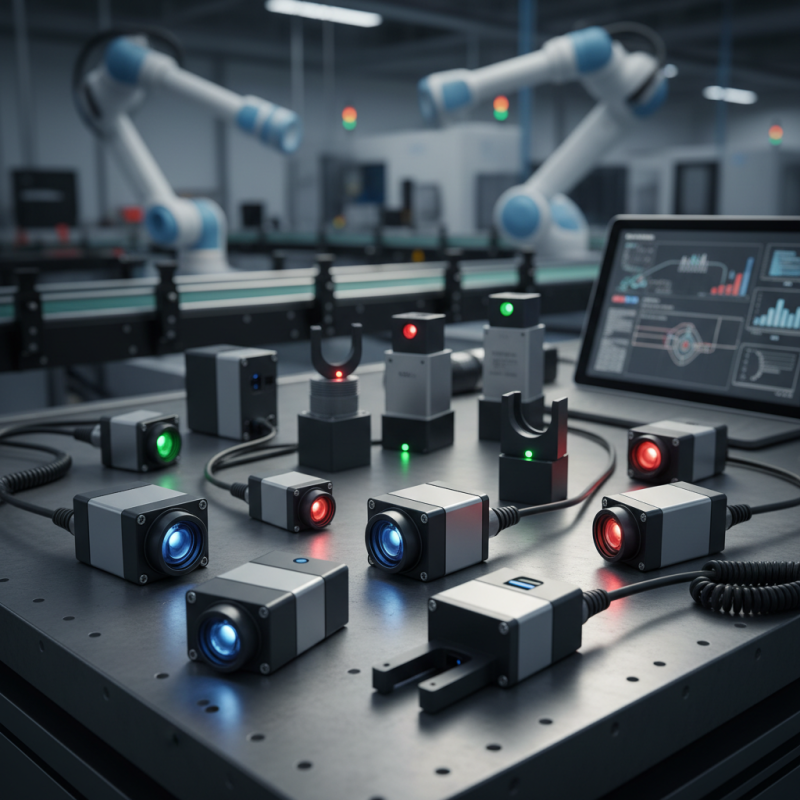
There are typically three types of photoelectric sensors: through-beam, retro-reflective, and diffuse. Through-beam sensors emit and receive light beams directly. They are effective for long distances but require precise alignment. Retro-reflective sensors bounce light off a reflector. They are easier to install but can struggle in harsh environments. Diffuse sensors detect objects using light scattered from the target. They are versatile but may react to nearby obstacles.
Each type has unique applications. For instance, through-beam sensors work well in conveyor systems. Meanwhile, retro-reflective sensors suit packaging machinery. Diffuse sensors are often used in robotics. Choosing the right type requires careful consideration. Think about the environment, distance, and installation space. Reflect on what might be a challenge. Your choice can greatly impact efficiency.
Photoelectric Sensors Types and Applications
Key Specifications to Evaluate When Selecting Photoelectric Sensors
When selecting photoelectric sensors, key specifications are crucial. The sensing distance is one of the primary factors. It determines how far the sensor can detect an object. Most photoelectric sensors range from 1mm to several meters, depending on the application. If the range is insufficient, it can impact performance. For instance, a recent industry report notes that 70% of sensor failures are linked to inadequate sensing distance.
Another vital specification is the response time. This refers to how quickly the sensor can detect an object and send a signal. Short response times, typically in milliseconds, are preferred in high-speed applications. A lengthy response time can lead to delays. According to a study, sensors with a response time exceeding 10ms may result in a 60% increase in production downtime.
The environment also plays a significant role. Different sensors are designed for varying conditions like temperature and humidity. Options vary for indoor and outdoor settings. Misjudging the sensor's environmental suitability can lead to malfunction. As per reports, nearly 40% of installations fail due to environmental mismatches. It's vital to carefully assess each specification before making a decision.
Impact of Environmental Conditions on Sensor Performance and Longevity
When selecting photoelectric sensors, environmental conditions are crucial. These sensors may face extreme temperatures, humidity, or dust. For instance, a study indicated that temperature changes can affect sensor accuracy by up to 15%. Humidity can lead to condensation on sensors, resulting in erratic readings. In dusty environments, sensors can be obstructed, causing failure.
Tips: Always consider the operating range of the sensor. Check its IP (Ingress Protection) rating. A higher rating indicates better resistance to environmental factors. Also, evaluate how the sensor materials react to chemicals in your environment. Low durability could lead to frequent replacements.
The impact of these factors can influence sensor longevity. Reportedly, sensors used in harsh conditions may need to be replaced every 2-3 years, instead of the expected 5-10 years. Managing these environmental risks is vital. Sometimes, the protection measures might not be sufficient, leading to unexpected downtime. Constant monitoring and maintenance are necessary.
Cost-Benefit Analysis: Choosing Between Different Photoelectric Sensor Brands
When selecting photoelectric sensors, a cost-benefit analysis can guide your decision. Different brands vary significantly in pricing. You might find a cheaper option that seems appealing, but consider the long-term implications. The initial cost is just part of the equation. Reliability and lifespan are crucial for your operations.
A reliable sensor means fewer malfunctions and less downtime. For instance, if a low-cost sensor fails frequently, it may end up costing more than a higher-priced model. Look closely at features like detection range and precision. A sensor that performs well in a controlled environment may struggle in harsher conditions. You want a sensor that meets your specific needs.
It’s also worth considering user reviews and recommendations. Sometimes, a lesser-known brand offers great value. However, don't overlook the importance of support and warranty. Investing in a quality product can reduce headaches later on. Take the time to weigh your options.
How to Choose the Right Photoelectric Sensors for Your Needs? - Cost-Benefit Analysis
| Sensor Type | Detection Range (m) | Output Type | Response Time (ms) | Operating Temperature (°C) | Estimated Cost ($) |
| Through-beam | 0.1 - 15 | NPN/PNP | 1 | -25 to +60 | 50 - 150 |
| Retro-reflective | 0.1 - 10 | NPN/PNP | 2 | -20 to +55 | 40 - 120 |
| Diffuse reflective | 0.05 - 8 | NPN/PNP | 3 | -20 to +50 | 30 - 100 |
| Laser | 0.1 - 30 | NPN/PNP | 0.5 | -10 to +50 | 100 - 300 |
Integrating Photoelectric Sensors into Existing Systems: Best Practices
Integrating photoelectric sensors into existing systems can be challenging but rewarding. Proper placement is essential. Sensors must face the right direction to detect objects effectively. A slight misalignment can lead to missed signals. Many overlook this detail. Adjusting sensor angles can enhance efficiency, reducing false readings.
Testing the sensors in real scenarios is crucial. It helps identify potential issues. Sometimes, sensors react differently based on environmental factors. Dust or moisture can affect performance. Regular maintenance is necessary to ensure reliability. Users should consider creating a routine to assess sensor functionality over time.
Training staff on the importance of these sensors can help minimize errors. Clear instructions on troubleshooting can be beneficial. Sometimes, users may neglect fine-tuning settings. This oversight can lead to miscommunication within systems. By actively engaging with the technology, companies can optimize their operations. Integrating these tools demands attention, but the rewards can be significant.