What Is the Best China Welded Steel Pipe Supplier?
Choosing the best China Welded Steel Pipe supplier requires more than comparing prices on a spreadsheet. A reliable decision begins with practical questions about quality, production control, and project fit. The right supplier should understand pipe diameter, wall thickness, steel grade, welding method, coating requirements, and service conditions. These details influence performance at the construction site, not just appearance in a catalog.
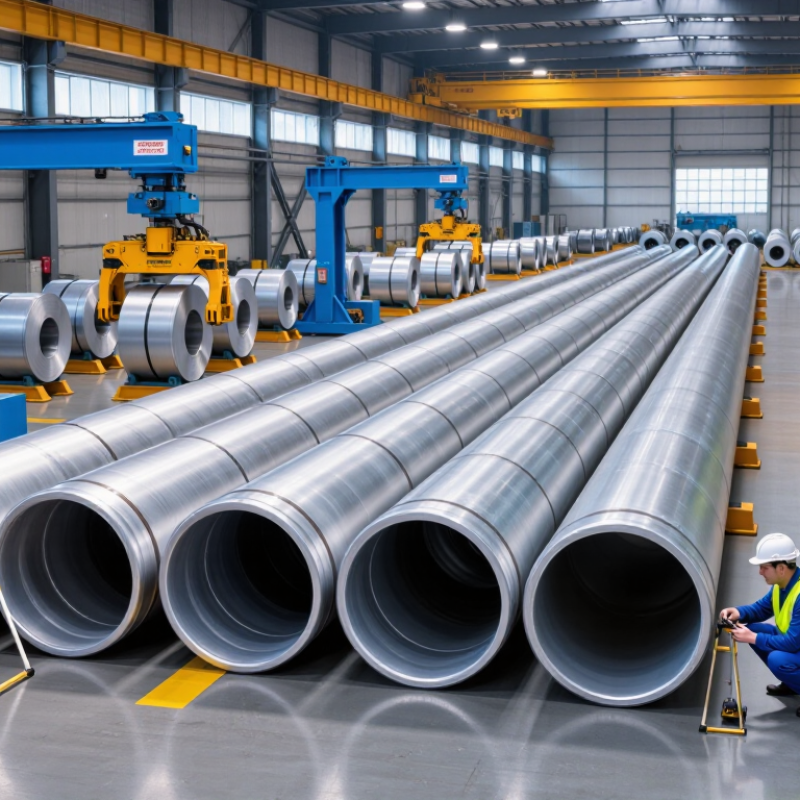
Experience matters. A capable manufacturer can explain how it controls welding temperature, alignment, surface treatment, and dimensional tolerance. It should also provide traceable mill certificates, inspection records, and test results from qualified laboratories. When possible, buyers should review factory photos, production equipment, and previous export experience. A supplier that welcomes independent inspection often shows stronger confidence in its process.
Look closely.
Price still matters, but an unusually low quotation may hide thinner walls, unclear specifications, or weak packaging. I have found that small omissions can create large delays, especially when pipes arrive with damaged ends or incomplete documents. No supplier is perfect, and one factory visit cannot reveal every risk. Buyers should compare samples, communication speed, correction procedures, and after-sales responsibility. A strong supplier does not simply promise compliance; it explains how compliance is measured. This article examines the key factors behind a dependable choice, helping importers evaluate Chinese Welded Steel Pipe manufacturers with greater clarity, caution, and confidence.
What Defines the Best China Welded Steel Pipe Supplier?
The best China welded steel pipe supplier is defined by evidence, not polished promises. A reliable supplier understands pipe standards, welding methods, coating requirements, and project tolerances. Ask for mill certificates, inspection records, and sample documents before placing a large order. These records should match the actual heat number printed on each pipe bundle.
Experience appears in small details. Skilled teams check weld seams, wall thickness, ovality, and pipe ends during production. They also understand how loading can damage coatings or create dents. A capable supplier can explain its ultrasonic testing, hydrostatic testing, and dimensional inspection procedures in clear language. Vague answers deserve caution.
Look closely at traceability. Each batch should connect to raw material records, production dates, inspection results, and packing information. Independent inspections can add confidence when the application is demanding. Communication matters too. A dependable supplier confirms drawings, tolerances, quantities, and delivery terms before production begins.
No supplier is flawless. That matters. Even experienced factories may face delays, equipment maintenance, or material changes. The real test is their response. Do they report problems early, offer practical solutions, and preserve written records? A factory visit can reveal more than a brochure: organized storage, calibrated instruments, trained inspectors, and clean production areas are useful signals. Price still matters, but an unusually low quotation may hide thinner walls, weaker inspection, or incomplete service.
What Is the Best China Welded Steel Pipe Supplier? - What Defines the Best China Welded Steel Pipe Supplier?
A practical, evidence-based scorecard for evaluating welded steel pipe suppliers without relying on company names or brand claims.
| Evaluation Dimension | Recommended Weight | Reliable Benchmark or Requirement | Evidence to Request | Priority |
|---|---|---|---|---|
| Applicable Product Standards | 20% | Products should be manufactured and tested against the contractually specified standard, such as ASTM A53 for general-purpose steel pipe, API 5L or ISO 3183 for line pipe, or EN 10217 for pressure-purpose welded steel tubes. | A current technical data sheet, standard edition, product scope, inspection plan, and certificate stating the exact standard and product grade. | Very High |
| Dimensional Capability | 15% | Capability should cover the buyer's required outside diameter, wall thickness, length, end finish, and dimensional tolerances. Tolerances must follow the selected product standard or approved purchase specification. | Mill capability list, dimensional inspection reports, calibration records, and sample measurements for outside diameter, wall thickness, straightness, and length. | Very High |
| Welding Process and Control | 15% | The supplier should use a welding process suitable for the pipe grade and size, such as ERW, HFW, or SAW, with controlled welding parameters and qualified procedures. | Welding procedure specifications, welder or operator qualification records where applicable, process-control logs, and weld-seam inspection results. | Very High |
| Inspection and Testing | 15% | Testing should match the applicable standard and service risk. Common controls include chemical analysis, tensile testing, flattening or bend testing, hydrostatic testing, and non-destructive examination of the weld seam. | Heat analysis, mechanical test reports, hydrostatic test records, ultrasonic or electromagnetic inspection reports, and third-party inspection documents when required. | Very High |
| Material Traceability | 10% | Each production lot should remain traceable from steel coil or plate through forming, welding, testing, coating if applicable, and final shipment. | Heat numbers, coil or plate records, production batch numbers, identification markings, packing lists, and material test certificates linked to each lot. | Very High |
| Quality Management System | 10% | A documented quality system based on ISO 9001 principles can demonstrate controlled purchasing, production, inspection, nonconformance handling, and corrective action. | Valid quality-system certificate, audit report or audit summary, quality manual extract, inspection procedures, and corrective-action records. | High |
| Surface Protection and Finishing | 5% | Packaging and protection should match the transport route and storage conditions. Requirements may include bare pipe protection, bevel protection, anti-corrosion coating, bundling, end caps, or seaworthy packing. | Approved packing specification, coating or surface-treatment procedure, photographs of completed packing, and marking requirements. | High |
| Documentation and Export Readiness | 5% | The supplier should provide complete commercial and technical documents, including invoices, packing lists, certificates of origin when required, inspection records, and shipping documents. | Sample document package, document index, certificate templates, export packing list, and confirmation of document submission timelines. | High |
| Delivery and Production Planning | 3% | A dependable supplier should provide a realistic production schedule, identify raw-material lead times, and communicate milestones from order confirmation through dispatch. | Production schedule, lead-time statement, capacity allocation plan, shipment milestone process, and records of schedule-change communication. | High |
| Commercial Transparency | 2% | The quotation should clearly separate pipe price, testing, coating, packing, inland transport, ocean freight, inspection, taxes, and other applicable charges. | Itemized quotation, payment terms, validity period, delivery term under Incoterms, warranty conditions, and change-order procedure. | Medium |
Suggested decision rule: shortlist suppliers that satisfy every mandatory technical requirement first, then compare their weighted scores. A low commercial price should not compensate for missing traceability, inadequate testing, or failure to meet the specified pipe standard.