Industrial Machinery Company

2026 Best Aluminum Profile For Pergola Manufacturers?

Choosing the 2026 Best Aluminum Profile For Pergola Manufacturers requires more than comparing prices or surface finishes. A reliable supplier must combine alloy knowledge, extrusion precision, weather resistance, and consistent quality control. The profile should support wide spans without excessive deflection. It should also maintain clean lines after years of sun, rain, and temperature changes.

John Weritz, a respected aluminum industry specialist and former sustainability leader at the Aluminum Association, has emphasized, “Material choice must serve performance, not appearance alone.” This principle matters in pergola manufacturing. A strong aluminum profile needs suitable alloy selection, accurate wall thickness, dependable coating, and carefully controlled tolerances. Small errors can appear clearly at corner joints or under a large adjustable roof.

Details matter.

Experienced manufacturers often test profile strength, drainage paths, coating adhesion, and connection stability before mass production. They should explain these results openly. They should also provide samples, technical drawings, and realistic lead times. Certifications help, but they do not replace practical inspection or honest communication.

Still, no manufacturer is perfect. Some published performance claims may sound impressive but lack project evidence. Buyers should question unsupported load ratings and unclear alloy descriptions. A better supplier welcomes those questions. This guide examines manufacturers that balance engineering, production capacity, customization, and long-term service. It also considers an uncomfortable point: the cheapest Aluminum Profile For Pergola may create higher installation and maintenance costs later. Good decisions begin with evidence, not polished catalog images.
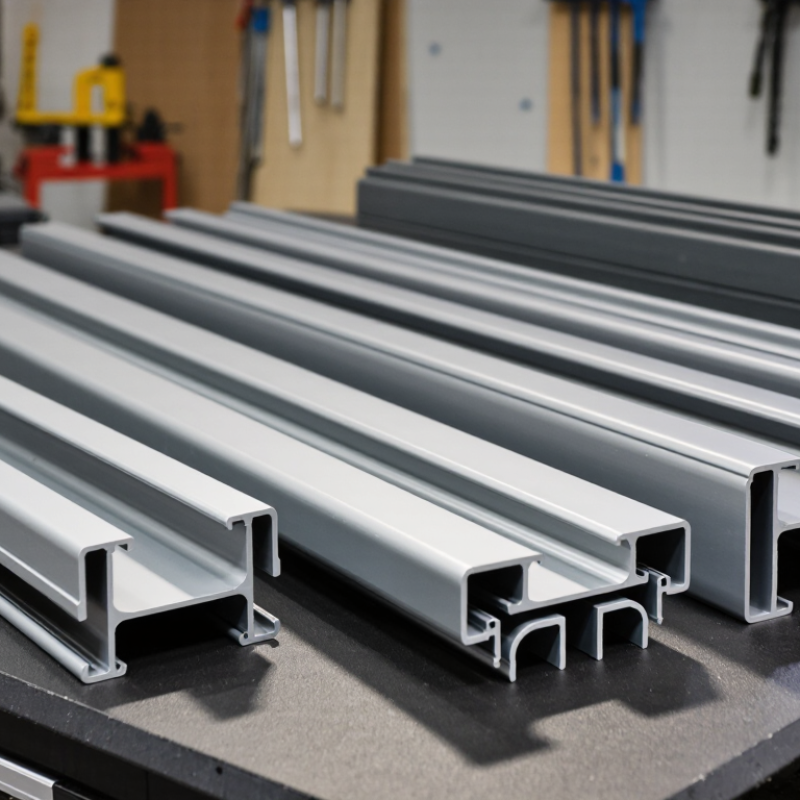
2026 Best Aluminum Profile For Pergola Manufacturers?

What Defines a High-Quality Aluminum Profile for Pergolas?

A high-quality aluminum profile for a pergola begins with the right alloy, not a glossy finish. Experienced fabricators assess strength, corrosion resistance, and machinability before approving a section. A suitable profile should carry roof loads without excessive deflection. Its walls need enough thickness for screws, brackets, and repeated adjustment. Too thin, and joints may loosen. Too heavy, and installation becomes unnecessarily difficult.

Precision matters at every connection. Clean extrusions should have consistent dimensions, straight edges, and stable tolerances. This allows beams, posts, and louvers to align without forced fitting. Well-designed cavities can hide drainage paths, wiring, and fasteners. Water must leave the structure quickly. Trapped moisture often causes staining, hardware corrosion, or freeze-related damage in colder regions. A reliable manufacturer tests profiles with realistic spans, wind pressure, and assembly loads, rather than relying only on catalog calculations.

Surface protection also deserves close inspection. A durable powder coating or anodized layer should resist ultraviolet exposure, humidity, and everyday scratching. Coating adhesion, color consistency, and salt-spray performance are useful quality checks. Thermal movement cannot be ignored; long beams need calculated expansion allowances. Small details matter. Still, no profile is perfect for every climate or roof design. I would question any supplier promising universal performance without project data. Factory records, batch traceability, test reports, and clear installation guidance make quality easier to verify. Even then, field conditions can reveal weaknesses that laboratory testing misses.

Which Aluminum Alloys and Temper Conditions Are Suitable?

For 2026 pergola manufacturing, alloy selection should follow load, span, climate, and extrusion shape. Aluminum 6063-T5 is common for posts, beams, and louvers because it offers smooth surfaces and reliable extrusion performance. Its moderate strength suits many residential structures. When higher strength is required, 6063-T6 can provide better mechanical performance after heat treatment. However, thicker walls may be more practical than choosing a harder temper alone.

For heavily loaded connectors, brackets, and reinforced members, 6061-T6 is often a stronger option. It handles demanding applications well, although its surface finish may be less refined than 6063. Temper condition matters after fabrication. Drilling, bending, and welding can reduce local strength, especially around heat-affected zones. A design that looks strong on paper may perform differently outdoors. Coastal air, trapped water, and poor drainage can accelerate corrosion, even with suitable alloy selection.

Tips: Confirm alloy and temper through mill certificates and independent test reports. Check yield strength, tensile strength, wall thickness, and corrosion resistance together. Do not specify T6 everywhere without checking cost and forming limits. Inspect weld areas carefully. An anodized or powder-coated surface helps, but coating cannot repair weak detailing. Small drainage holes and isolated dissimilar metals often prevent expensive field problems.

2026 Best Aluminum Profiles for Pergolas: Alloy and Temper Comparison

The chart compares representative minimum tensile and yield strength values for commonly extruded pergola-profile alloys. 6063-T5 is widely used for decorative and general-purpose profiles, while 6063-T6, 6005A-T6, and 6061-T6 provide higher structural strength. Actual values vary with profile thickness, extrusion standard, and temper; confirm the final specification against EN 755-2 or ASTM B221.

How Are Pergola Profiles Designed, Manufactured, and Finished?

Designing an Aluminum Pergola Profile starts with load, span, and drainage requirements. Engineers study wind pressure, roof weight, connection points, and expected thermal movement. A slim section may look elegant, but it can flex under real weather conditions. Not every elegant section is strong enough.

Most pergola profiles use architectural aluminum alloys, often selected for their balance of strength, corrosion resistance, and extrudability. Engineers create a die that forms the hollow chambers, grooves, and concealed channels. Heated billets pass through the die, then the profiles are cooled, stretched, and aged. Precision cutting and CNC machining prepare joints, drainage holes, and fastener locations. Small errors matter here. A poorly aligned channel can complicate installation.

Finishing protects the surface and shapes its appearance. Anodizing can create a durable metallic layer, while powder coating provides broader color choices and additional weather resistance. Before shipment, reliable manufacturers inspect wall thickness, straightness, coating adhesion, color consistency, and assembly fit. Sample testing is useful, but it cannot replace production control. A finished profile may pass a visual check and still reveal weakness during installation. This is why experienced teams review drawings against actual site conditions, especially for coastal air, heavy rain, and large roof spans. Some designs still need revision after testing. That is not failure; it is part of responsible engineering.

2026 Best Aluminum Profile For Pergola Manufacturers? - How Are Pergola Profiles Designed, Manufactured, and Finished?

Design, Manufacturing & Finishing Dimension Typical Engineering Data Why It Matters for a Pergola Profile Common Reference or Verification Method
Primary extrusion alloy 6063 aluminum alloy is widely selected for architectural profiles because it provides good extrudability, surface quality, corrosion resistance, and moderate strength. Supports clean architectural surfaces, detailed channels, drainage paths, and reliable finishing performance. Chemical composition and mechanical properties should be checked against the specified aluminum alloy standard and mill certificate.
Higher-strength alloy option 6061-T6 is commonly considered where higher structural strength is required, although it is generally less suitable than 6063 for very complex architectural shapes. May reduce section size or deflection in heavily loaded beams, brackets, and connection components. Confirm alloy, temper, yield strength, and tensile strength through the applicable material specification and test certificate.
Profile wall thickness Typical architectural pergola sections use approximately 1.5–3.0 mm walls; larger load-bearing beams may require thicker walls or internal reinforcement. Balances extrusion cost, weight, screw-holding performance, stiffness, and resistance to local denting. Final thickness must be determined by span, wind load, snow load, connection design, and structural calculations.
Section geometry Common design features include hollow box sections, ribs, screw channels, snap-fit covers, concealed-gutter cavities, and service-access grooves. Improves bending stiffness while allowing drainage, concealed fasteners, lighting cables, louvers, and trim components. Review 2D drawings, 3D models, section properties, and interference checks before die production.
Design load inputs Wind, snow, self-weight, rainwater accumulation, louver movement, attached screens, and local code requirements must be defined before sizing the profile. A visually strong section can still fail if its span, support spacing, or connections are not matched to site loads. Use the applicable national or regional building code and document the design assumptions.
Deflection control Project-specific serviceability limits are commonly set by the engineer; frequently used limits include span/180, span/240, or span/360 depending on the application. Controls visible sagging, water drainage, louver alignment, gasket compression, and operating clearance. Verify by structural calculation or finite-element analysis using the actual section properties and support conditions.
Die design and extrusion ratio The die must provide balanced metal flow, adequate bearing lengths, appropriate wall transitions, and controlled hollow-section mandrels. Balanced flow reduces twisting, uneven wall thickness, die lines, tearing, and dimensional instability. Validate through die-flow review, first-article extrusion, dimensional inspection, and profile straightness checks.
Billet heating and extrusion Aluminum billets are heated to a controlled extrusion temperature, then pressed through a custom die; actual temperature and speed depend on alloy, section complexity, and equipment. Stable thermal control helps maintain surface quality, dimensional accuracy, and consistent mechanical properties. Record billet, container, die, and exit temperatures together with extrusion speed and lot information.
Cooling, stretching, and straightening After extrusion, profiles are cooled, stretched to remove residual stress, cut to specified lengths, and inspected for straightness and twist. Reduces distortion during assembly and improves fit between beams, posts, covers, brackets, and drainage parts. Dimensional tolerances should be specified using the relevant aluminum extrusion tolerance standard.
Heat treatment and temper Common architectural tempers include T5 and T6. T5 is typically associated with cooling after extrusion followed by artificial aging; T6 uses solution heat treatment and artificial aging. The selected temper affects strength, dimensional stability, machining behavior, and structural design capacity. Verify hardness and tensile properties by batch, with heat-treatment records where required.
Cutting and CNC machining Operations may include precision cutting, drilling, tapping, slotting, milling, end notching, and drainage-hole production. Accurate machining supports concealed joints, water outlets, fastener alignment, and repeatable installation. Use approved CNC programs, first-piece inspection, go/no-go gauges, and documented dimensional tolerances.
Pretreatment before coating Cleaning, etching, rinsing, and conversion treatment remove contaminants and prepare the aluminum surface for paint adhesion and corrosion protection. Insufficient pretreatment can cause poor adhesion, filiform corrosion, blistering, or premature coating failure. Check bath concentration, pH, conductivity, rinse quality, surface cleanliness, and coating adhesion.
Powder coating Powder coating provides a broad color range and a durable decorative layer; common architectural performance classes include AAMA 2603, AAMA 2604, and AAMA 2605. Suitable for outdoor appearance, scratch resistance, color consistency, and weather exposure when the correct performance class is selected. Verify film thickness, cure schedule, adhesion, impact resistance, gloss, color difference, and weathering requirements.
Anodizing Anodizing creates a controlled aluminum-oxide layer; architectural anodized finishes are commonly specified by coating thickness and appearance class. Provides a metallic appearance and durable surface while preserving the visible character of the aluminum substrate. Specify anodizing thickness, color tolerance, surface uniformity, sealing quality, and the applicable anodizing standard.
Finish thickness and appearance Required coating thickness depends on the selected finish system and exposure category; it should be defined in the purchase specification rather than assumed. Consistent thickness and gloss help prevent visible variation between posts, beams, louvers, trims, and accessories. Measure with calibrated dry-film or eddy-current instruments and inspect under agreed lighting conditions.
Drainage and water management Integrated gutters, slopes, weep holes, end caps, and downspout channels should be designed as a continuous water-management system. Prevents standing water, leakage at joints, staining, freeze-related damage, and unwanted discharge near foundations. Conduct a controlled water test on assembled corners, joints, outlets, and downspout connections.
Fasteners and galvanic protection Fastener material, coatings, isolation washers, sealants, and contact surfaces should be selected for the environmental exposure and adjacent materials. Reduces galvanic corrosion, staining, loosening, and damage to the finished aluminum surface. Review the fastener compatibility schedule and inspect torque, sealing, isolation, and edge distances during assembly.
Final quality inspection Inspection should cover alloy and temper, dimensions, wall thickness, straightness, twist, machining, finish, color, packaging, and traceability. A documented inspection plan reduces installation delays and makes profile performance more consistent across production batches. Use an approved inspection and test plan, batch identification, calibrated equipment, and retained quality records.
Engineering note: The values and ranges shown are typical industry design references, not universal specifications. Final profile selection should be verified against project span, local wind and snow requirements, drainage conditions, connection details, material certificates, and the applicable building and coating standards.

What Factors Determine the Best Pergola Profile Manufacturers in 2026?

2026 Best Aluminum Profile For Pergola Manufacturers?

The best pergola profile manufacturer is not defined by appearance alone. It must combine structural knowledge, tested materials, and dependable production control. In 2026, buyers should examine alloy grade, wall thickness, temper, drainage design, and connection strength. These details affect wind resistance, corrosion performance, and installation time.

The International Aluminium Institute reports that recycling aluminium requires about 95% less energy than primary production. Therefore, manufacturers should provide traceable recycled content and clear material documentation. Surface finishing also matters. Powder coating thickness, pretreatment, and color consistency influence performance under sunlight and rain. Look for test records, not attractive samples only. A reliable supplier should explain load calculations, tolerances, coating standards, and quality inspections in practical language.

Tips: Request independent test reports, batch certificates, and installation drawings before placing a large order. Ask how rejected profiles are handled. Poor answers reveal weak systems. Check production capacity against your seasonal demand, but do not trust capacity claims without evidence. The World Economic Forum has repeatedly highlighted supply-chain transparency as a major manufacturing priority. That applies here, too. A factory may offer excellent profiles, yet still fail through delayed packaging or inconsistent dimensions. No supplier is perfect. The useful question is whether its controls detect mistakes early and correct them openly.

How Should Buyers Evaluate Quality, Compliance, and Supply Capability?

2026 Best Aluminum Profile For Pergola Manufacturers?

How Should Buyers Evaluate Quality, Compliance, and Supply Capability?

A reliable aluminum profile begins with verified alloy and temper data. Ask for mill certificates, not only a polished sample. Check wall thickness at several points, especially around corners and screw channels. Small variations can weaken long spans. In factory audits, buyers should inspect extrusion dies, cutting accuracy, and batch identification. A barcode or stamped code helps trace each profile back to production records.

Coating quality deserves close attention. Review powder coating thickness, color consistency, adhesion, and resistance to humidity. Outdoor pergolas face rain, heat, salt air, and repeated cleaning. Request independent test reports where practical. Compliance also depends on the installation market. Confirm structural calculations, wind-load requirements, fire rules, and applicable building standards before approving a design. Certificates without clear scope can create false confidence. That mistake is expensive.

Supply capability is more than monthly output. Ask whether the manufacturer can maintain alloy supply during peak seasons. Check tooling ownership, minimum order quantities, backup equipment, packaging methods, and replacement-part control. Request recent delivery records with sensitive information removed. A stable supplier should explain lead times honestly, including delays caused by custom dies or coating changes. Visit the warehouse if possible. Look for protected bundles, dry storage, and clear labels. Perfect paperwork is not enough. Some suppliers still lack consistent inspection records, and buyers should admit that risk before signing. A small pilot order can reveal cutting errors, coating damage, and communication gaps earlier.