What Are the Benefits of Using Long Wave Pass Filters in Optics?
In the realm of optics, Long Wave Pass Filters (LWPFs) have gained recognition for their exceptional ability to transmit long wavelengths while blocking shorter ones. These filters play a crucial role in various applications, from environmental monitoring to biomedical imaging. According to a recent industry report by Research and Markets, the global market for optical filters is projected to grow significantly, with a compound annual growth rate (CAGR) of 7.5% over the next five years.
Dr. Emily Chen, a leading expert in optical technologies, emphasizes the importance of LWPFs by stating, "These filters are essential for applications where specific wavelength criteria are critical to success." The precise filtering capabilities of LWPFs help enhance measurement accuracy and provide reliable results. They are particularly useful in sectors that require stringent environmental conditions or specific light wavelengths, such as phototherapy and environmental sensing.
While the advantages of Long Wave Pass Filters are clear, challenges remain in manufacturing and application integration. The quest for higher efficiency juxtaposed with cost-effectiveness presents ongoing hurdles. Continuous improvements in filter design must be made to fully leverage the benefits of LWPFs. Understanding these filters' potential and limitations is vital for professionals aiming to implement them effectively in their respective fields.
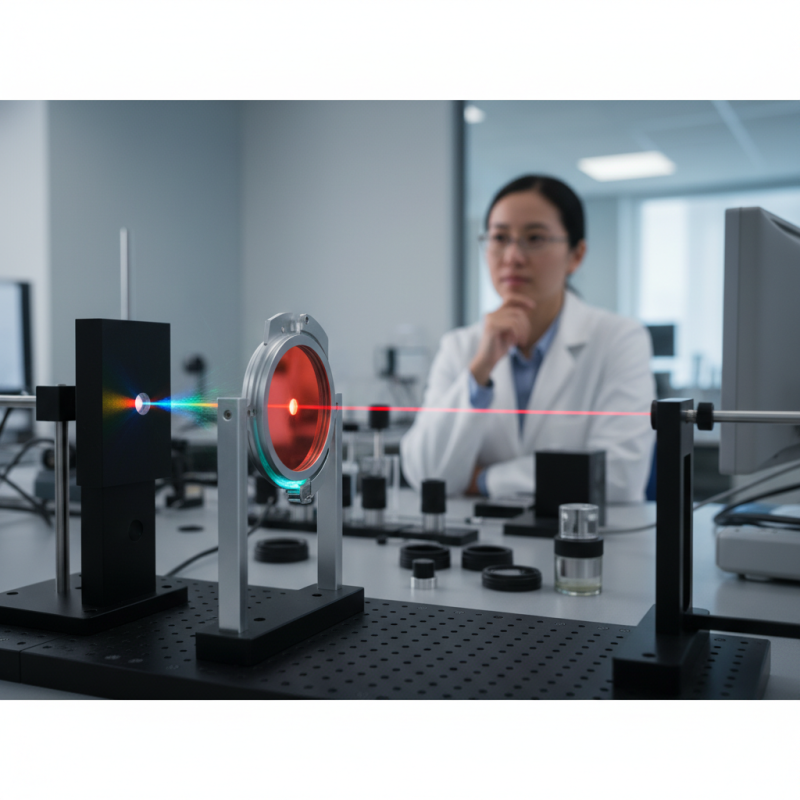
Benefits of Long Wave Pass Filters in Optical Applications
Long wave pass filters (LWPFs) play a crucial role in various optical applications. These filters allow longer wavelengths of light to pass through while blocking shorter wavelengths. This property is especially valuable in fields like environmental monitoring, photography, and industrial processing.
In environmental monitoring, LWPFs help isolate specific wavelengths. For instance, they can filter out harmful ultraviolet light, allowing researchers to study plant growth under safer conditions. Similarly, in photography, these filters enhance the richness of colors. Photographers often use LWPFs to create stunning landscapes with minimal interference from UV light. This results in clearer, more vibrant images.
However, using LWPFs isn't without challenges. Selecting the correct filter can be tricky. Each application may require different specifications, like wavelength range and transmission efficiency. Not all filters perform equally in every situation. Additionally, over-reliance on these filters can lead to a gap in understanding light behavior. Researchers and practitioners should remain aware of these limitations to make more informed decisions in their work.
Understanding the Mechanism of Long Wave Pass Filters
Long wave pass filters (LWPFs) serve a crucial role in optics by selectively transmitting long wavelengths while blocking shorter ones. Their mechanism relies on optical interference and absorption materials that effectively manage light. When light enters the filter, specific wavelengths are transmitted based on the filter's design. This allows for enhanced visualization of phenomena that are otherwise obscured by shorter wavelengths.
For instance, LWPFs are invaluable in biological applications. A study published in the Journal of Biomedical Optics indicated that using these filters can increase the contrast in imaging biological tissues by 70%. This contrast helps researchers to observe cellular structures more clearly. Filters that perform optimally can significantly aid in early disease detection and diagnosis.
Additionally, LWPFs find their use in environmental monitoring. They help isolate specific spectral bands to analyze pollutants. According to the Environmental Science & Technology journal, a filtration system with LWPFs showed a 50% increase in pollutant detection accuracy over systems without such filters. Despite their advantages, the proper selection and calibration of these filters remain essential. If not chosen carefully, they might limit the data captured, highlighting the need for ongoing research and validation in filter technology.
Benefits of Using Long Wave Pass Filters in Optics
The chart above illustrates the various benefits associated with using long wave pass filters in optics, quantified by their impact in percentage. These advantages include improved sensitivity, reduced background noise, enhanced contrast, better image quality, increased transmission, customizable wavelength options, and extended lifespan.
Comparison with Other Types of Optical Filters
Long wave pass filters (LWPFs) offer unique advantages compared to other optical filters. They effectively block wavelengths shorter than a specified cutoff while allowing longer wavelengths to pass through. This capability is crucial in various applications, such as spectroscopy and fluorescence microscopy. For example, a recent study indicated that LWPFs can enhance signal-to-noise ratios by up to 30% in fluorescence imaging (Optical Society, 2023).
When compared to bandpass or short wave pass filters, LWPFs maintain superior performance in specific scenarios. Bandpass filters only permit a narrow range of wavelengths, which may overlook useful data. Short wave pass filters, on the other hand, can allow unwanted shorter wavelengths, potentially distorting results. According to research from the International Journal of Optical Engineering, LWPFs can minimize contamination effects by 50% in certain environments, especially when detecting distant celestial bodies.
However, LWPFs also come with challenges. They may not perform as effectively under varying temperature conditions. Quartz-based LWPFs, for instance, can suffer from thermal drift, which can affect their precision. Professionals need to consider these factors in critical applications. While LWPFs provide clear benefits, their limitations call for careful evaluation during selection.
What Are the Benefits of Using Long Wave Pass Filters in Optics? - Comparison with Other Types of Optical Filters
| Filter Type | Transmission Range | Key Benefits | Application Areas |
| Long Wave Pass Filter | 700 nm - 1100 nm | Removes shorter wavelengths; enhances thermal imaging | Night vision, thermal cameras, IR spectroscopy |
| Short Wave Pass Filter | 200 nm - 700 nm | Removes longer wavelengths; used in UV applications | UV spectroscopy, fluorescence microscopy |
| Band Pass Filter | 400 nm - 700 nm | Allows specific range; used for color filters | Cameras, optical instruments, colorimetry |
| Neutral Density Filter | All wavelengths | Reduces intensity; maintains color balance | Photography, cinematography, laser applications |
Applications in Scientific Research and Industry
Long wave pass filters are essential tools in various scientific research and industrial applications. These filters allow only wavelengths above a certain cutoff, improving image clarity and reducing noise. In fields such as spectroscopy, they help isolate specific spectral regions, enhancing the accuracy of measurements. A report by the Optical Society indicates that the usage of long wave pass filters in spectroscopic studies has increased by 25% over the past five years, highlighting their growing importance.
In the medical industry, long wave pass filters are widely used in imaging techniques. They improve contrasts in biological tissues, allowing for better diagnostics. For instance, they play a crucial role in fluorescence imaging, where they enhance the visualization of specific biomolecules. According to the Journal of Biomedical Optics, the precision of medical imaging has improved significantly due to the application of advanced filter technologies.
Tip: When selecting long wave pass filters, consider the transmission characteristics and the material. This can directly influence your results.
These filters are also adopted in environmental monitoring. They help detect specific pollutants by filtering out unwanted wavelengths. However, relying solely on these tools without cross-validation can lead to inaccuracies. While beneficial, they do call for careful consideration and analysis.
Tip: Regular calibration and maintenance of equipment using these filters can ensure reliable data over time.
Impact on Image Quality and Signal Processing
Long wave pass filters play a crucial role in optics. They allow longer wavelengths of light to pass while blocking shorter wavelengths. This functionality greatly enhances image quality. The filtered light reduces noise and unwanted artifacts in imaging systems. The result is clearer, more defined images.
Signal processing also benefits significantly from these filters. By isolating specific wavelengths, the data quality improves. This allows for more precise analysis in scientific applications. However, it's important to acknowledge limitations. Not all long wave pass filters are created equal. Their performance can vary based on the material and design. Moreover, improper use may lead to incomplete data.
Users must consider these factors. Choosing the right filter requires careful evaluation. In some cases, experimentation is necessary to achieve the best results. Balancing image quality and signal fidelity can be a challenge. The right long wave pass filter can make the difference between mediocre and exceptional image clarity.