Choosing the right press machine is rarely a simple comparison of tonnage, speed, and price. Global buyers must examine production goals, material thickness, tooling compatibility, safety systems, energy use, and after-sales support. A machine that performs well in one factory may create costly problems in another.
Shigeo Shingo, a renowned manufacturing engineer, observed, “The most dangerous kind of waste is the waste we do not recognize.” His warning fits press machine purchasing closely. Hidden waste can appear as long setup times, uneven forming, excessive scrap, or delayed replacement parts. These details matter when a machine operates beside workers for thousands of production cycles.
This guide reviews seven press machines suited to different global purchasing needs. It considers hydraulic, mechanical, pneumatic, servo, and specialized configurations. Each option is assessed through practical factors, including frame strength, control accuracy, maintenance access, operator protection, and supplier reliability. Real-world conditions matter. A compact workshop may value flexibility, while a high-volume plant may prioritize repeatability and cycle speed.
There is no perfect machine.
Buyers can still make better decisions by matching equipment to verified production data. Manufacturer certifications, documented testing, training resources, and transparent warranty terms deserve careful attention. Some product claims sound impressive but remain difficult to verify without sample runs or customer references. That uncertainty should not be ignored. The best press machine is not always the most powerful model. It is the one that delivers safe, consistent, economical results within the buyer’s actual operating environment.
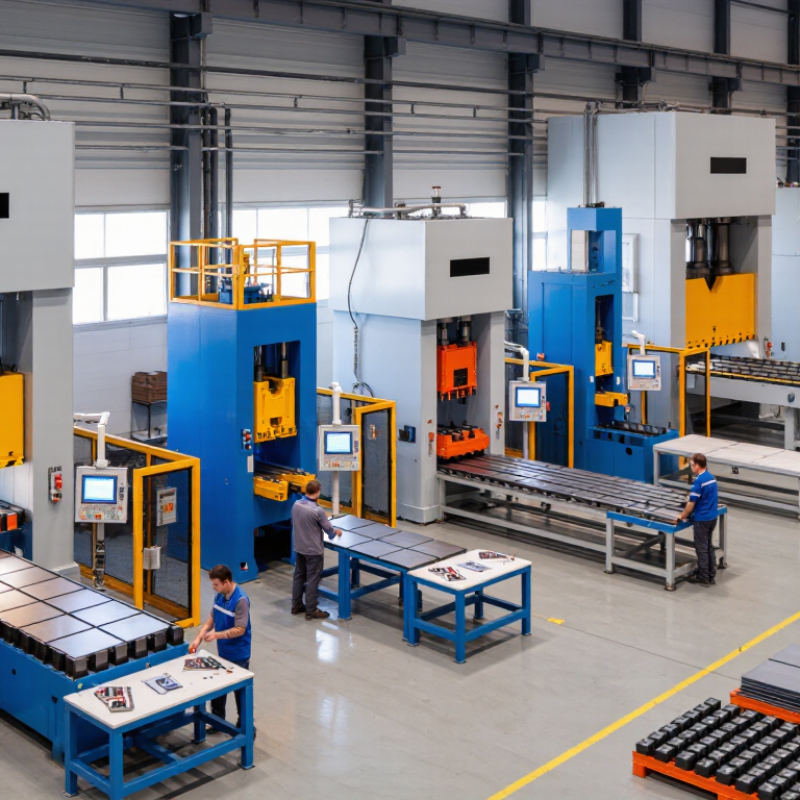
For global buyers comparing the seven best press machines, specifications matter more than catalogue photographs. Force is the starting point. It describes the pressure the machine can apply during forming, bending, or compression. Match it with material thickness, width, tooling, and process requirements. Excess capacity can increase purchase and energy costs. Insufficient capacity may cause poor forming or premature wear. Not every larger machine is better.
Stroke is the working travel of the ram. A long stroke helps with deep parts, but it may reduce production speed. Bed size must support the workpiece and leave room for tooling, clamps, and operator access. Measure the actual usable area, not only the published frame dimensions. A 1,200-millimeter bed may provide less space after safety clearances. This detail is often overlooked.
Cycle time should include loading, pressing, return travel, unloading, and inspection. A quoted five-second cycle can be misleading. Ask for a complete production cycle under realistic conditions. Duty rating shows how long the machine can operate before heat affects performance. Intermittent and continuous ratings are not interchangeable. Check cooling, lubrication, electrical compatibility, service access, and spare-part availability in the destination country. I would also question any specification that lacks testing conditions. Real production is rarely as clean as a demonstration.
7 Best Press Machines for Global Buyers
Choosing a press machine depends on material, cycle speed, force, and available maintenance skills. Hydraulic presses deliver strong, steady force for forming, stamping, and deep pressing. Mechanical presses suit high-volume work, using a flywheel and crank mechanism. They are fast, but setup accuracy matters. Servo presses offer programmable motion and lower energy use. Their higher purchase cost may challenge smaller workshops. Pneumatic presses use compressed air for light assembly, punching, and pressing tasks. They are clean and quick, but usually provide less force.
Heat presses apply controlled temperature and pressure to bond or shape materials. Uneven heating can damage surfaces, especially near edges. Vacuum presses remove air during lamination or molding. They create smooth results, though leaks can ruin an entire batch. Baling presses compact recyclable materials into dense packages. Correct chamber size and safe loading are essential. I have seen buyers focus on maximum force and overlook feeding space. That decision often causes daily frustration.
Tips: Confirm voltage, safety standards, spare-part access, and operator training before ordering. Ask for force curves, cycle tests, and material samples. A local technician may matter more than a small price difference. Keep records of pressure, temperature, and cycle time. They expose problems early. I still find machine selection imperfect because real materials vary between shipments. Leave adjustment room. Also, estimate noise, floor strength, ventilation, and compressed-air quality before installation.
Choosing among seven press machine types requires more than comparing maximum force. Pneumatic presses often cover 10–100 kN, while mechanical and servo presses may reach 2,000 kN. Large hydraulic systems can approach 10,000 kN. Numbers need context. A 500 kN machine may outperform a larger model when stroke, die size, and cycle speed match the job.
Accuracy also changes across the working range. Servo-driven presses can approach ±0.1 mm with suitable tooling and position feedback. Toggle designs offer strong repeatability near the end of the stroke. Hydraulic presses provide excellent force control, but oil temperature, seal wear, and frame deflection can affect position accuracy. Ask for test data at your intended load, not an unloaded factory figure.
ENERGY USE Energy use deserves equal attention. Pneumatic equipment may consume significant compressed air during frequent cycling. Mechanical presses often use less energy per stroke, while servo systems can reduce idle consumption and recover braking energy. Hydraulic machines may draw power continuously unless their pumps use variable-speed control. Request readings in kWh per production cycle. A short trial with actual material is more reliable than a brochure. Measure noise, heat, cycle time, and rejected parts too. I would leave a margin below the rated force; operating at the limit every day can shorten service life. That choice is easy to overlook.
For global buyers, the seven best press machine categories include hydraulic, mechanical, servo, pneumatic, forging, stamping, and four-column presses. The right choice depends on force, stroke, cycle speed, material, and safety controls. A machine may perform well in one factory but fail another site’s electrical inspection. CE marking requires documented conformity, guarding, emergency stops, and technical files for the target market. ISO 12100 supports structured hazard identification and risk reduction before shipment.
UL 508A mainly addresses industrial control panels, not the entire press. Request panel construction records, component ratings, short-circuit data, and inspection evidence. For 400 or 480 V systems, verify phase, frequency, full-load current, transformer requirements, and motor compatibility. A qualified local electrician should confirm the incoming disconnect and grounding arrangement.
Tips: Request wiring diagrams, risk assessments, test reports, and a video showing the safety circuit working. Check whether guarding still permits cleaning and die changes. Small details matter. My practical concern is the gap between a certificate and daily operation. A tidy document folder cannot prove that an operator will avoid every pinch point. Run a factory acceptance test using realistic tooling, materials, cycle times, and fault simulations. Do not assume a 480 V label guarantees plug-and-play installation. Some specifications remain unclear until safety reviewers ask difficult questions.
| Rank | Generic Press Type | Typical Force Range | Typical Stroke / Speed | Best-Fit Applications | CE Readiness | UL 508A Control Panel | ISO 12100 Safety Basis | 400 / 480 V Compatibility | Global-Buyer Assessment |
|---|---|---|---|---|---|---|---|---|---|
| 1 | Four-Post Hydraulic Press | 100–2,000 metric tons | 250–800 mm stroke; approximately 5–25 mm/s working speed | Deep forming, molding, laminating, straightening, and large-area compression | Usually available with CE technical documentation, guarding, emergency stops, and declaration of conformity | Control cabinet can be specified and documented to UL 508A; confirm the panel SCCR and component listings | Requires documented hazard identification, risk reduction, guarding, and hydraulic-system safety measures | Commonly configurable for 400 V / 50 Hz or 480 V / 60 Hz three-phase supply; transformer or drive changes may be required | Best overall choice for high-force, large-workpiece production |
| 2 | C-Frame Hydraulic Press | 20–500 metric tons | 100–300 mm stroke; approximately 5–50 mm/s working speed | Assembly, punching, bending, insert fitting, and general fabrication | Generally suitable when the manufacturer supplies guarding, safety circuits, manuals, and conformity records | UL 508A panel construction is practical for export versions; verify short-circuit current rating and field wiring details | Risk assessment should address point-of-operation access, unexpected ram movement, and hydraulic pressure release | Usually offered with motor starters or drives rated for 400 V and 480 V three-phase systems | Strong balance of accessibility, cost, and flexibility |
| 3 | Straight-Side Mechanical Press | 100–1,600 metric tons | 50–300 mm stroke; approximately 15–80 strokes/minute | High-volume stamping, automotive components, appliance parts, and progressive-die work | Can be prepared for CE with fixed/interlocked guards, dual-palm controls, light curtains, and safety validation | Electrical control panels can be designed to UL 508A; the complete press still requires separate machine safety evaluation | Risk assessment must cover flywheel, clutch/brake, crankshaft, die space, feeding system, and stored mechanical energy | 400 V / 50 Hz and 480 V / 60 Hz configurations are common; frequency, motor speed, and control-voltage compatibility must be checked | Best for fast, repeatable production with dedicated tooling |
| 4 | Servo Mechanical Press | 80–1,000 metric tons | 50–300 mm programmable stroke; approximately 20–80 strokes/minute | Complex forming, variable-speed stamping, lightweight materials, and short-to-medium production runs | Typically exportable with CE-oriented safety PLCs, monitored guarding, and documented performance levels | Servo drives and control panels can be assembled to UL 508A requirements; confirm drive listings and SCCR documentation | Assessment should include servo motion, regenerative energy, software limits, access control, and safe torque-off functions | Often available for 400 V or 480 V three-phase input; drive input range and braking/regeneration requirements are critical | Best for process control, energy efficiency, and advanced forming profiles |
| 5 | Gap-Frame Eccentric Press | 10–315 metric tons | 25–150 mm stroke; approximately 30–150 strokes/minute | Blanking, piercing, shallow drawing, bending, and general sheet-metal stamping | Widely available with CE safety guarding, clutch/brake monitoring, and emergency-stop systems | Panel can be built to UL 508A, subject to listed components, wiring methods, SCCR, and local installation requirements | Risk controls should address the die opening, ram stroke, hand access, noise, and mechanical transmission parts | 400 V / 50 Hz and 480 V / 60 Hz motor packages are commonly specified for international projects | Best value for general-purpose sheet-metal work |
| 6 | Pneumatic Power Press | 1–50 metric tons | 25–100 mm stroke; approximately 30–250 strokes/minute | Light stamping, riveting, assembly, marking, crimping, and small-part production | Can meet CE obligations when supplied with compliant valves, guards, controls, and pneumatic safety functions | Electrical cabinet may be built to UL 508A; pneumatic safety components remain subject to separate machine-risk requirements | Risk assessment should cover compressed-air storage, unintended cycling, pinch points, and loss-of-pressure behavior | Control power can be adapted to 400 V or 480 V installations, but the air system itself requires a suitable compressed-air supply | Best for compact, fast, lower-force operations |
| 7 | Hot-Forming Hydraulic Press | 100–2,500 metric tons | 200–600 mm stroke; approximately 2–20 mm/s forming speed | Heat-assisted forming, high-strength steel, composite molding, and temperature-controlled compression | CE preparation must include press, furnace or heating system, thermal guarding, interlocks, and integrated control documentation | Control panels can be specified to UL 508A; heating equipment, disconnects, SCCR, and enclosure temperature ratings need review | Risk assessment must include heat, hot surfaces, hydraulic energy, fumes, tooling access, and emergency cooling or shutdown | 400 V / 50 Hz and 480 V / 60 Hz press supplies are feasible; heating loads may require separate feeders and power calculations | Best for specialized high-strength and temperature-dependent forming processes |
7 Best Press Machines for Global Buyers?
A serious comparison starts with output, not the machine’s advertised tonnage. Measure usable capacity per hour, including loading, heating, cooling, and changeover time. A 100-ton press may look powerful, yet slow handling can reduce daily production. My first spreadsheet ignored changeover time. That assumption was too optimistic.
The U.S. Department of Energy’s Operations and Maintenance Best Practices Guide reports that predictive maintenance can reduce maintenance costs by 25–30% and downtime by 35–45%. Buyers should convert those figures carefully, not copy them blindly. Record service hours, spare-part prices, lubrication intervals, and average repair delays. For seven shortlisted machines, calculate annual maintenance cost as labor hours multiplied by local wages, plus parts and lost production. Keep a contingency reserve. Machines rarely follow the brochure perfectly.
Warranty length matters only when coverage is usable across borders. Check response time, excluded components, technician availability, and shipping responsibility. A longer warranty may still deliver weak value if downtime continues. Use this payback formula: purchase and installation cost divided by annual net benefit. The net benefit includes added output, labor savings, energy costs, maintenance, and downtime losses. A two-year payback may appear attractive, but unstable demand can extend it sharply. The International Energy Agency’s energy-efficiency reports repeatedly emphasize measuring real operating conditions; nameplate efficiency is not production efficiency. Test with actual materials, shift patterns, and operators before approving the final purchase.
This comparison uses anonymized machine categories and practical benchmark estimates for hydraulic, mechanical, pneumatic, and servo-driven press equipment. The buyer score combines rated capacity, annual maintenance hours, warranty duration, and estimated payback period. A higher score indicates a stronger overall purchasing profile.